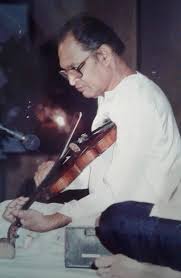
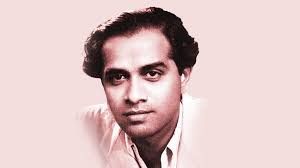
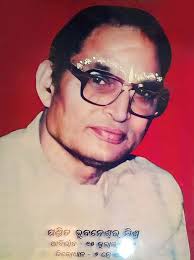
Bhubaneswar Mishra
Violinist, Composer, Odissi Music Architect; Accompanist and Music Director for Odissi dance
Notable Students
Gurus/Teachers
Biography
Achievements
- •1950–1955 - Joined/regularly featured on All India Radio, Cuttack, as violinist and arranger.
- •1956–1962 - Active contributor to the Jayantika collective that codified Odissi dance’s modern repertoire and stage grammar; collaborated closely with leading gurus and musicians.
- •Late 1950s–1960s - Composed and arranged early Odissi pallavis that became canonical in concert repertoire; refined the abstract nritta score structure.
- •1960s–1970s - Led/anchored Odissi orchestras for national tours and festivals; accompanied top dancers in India and overseas.
- •1960s–1980s - Created abhinaya settings on Gita Govinda and Odia/Oriya bhajans for Odissi stage, working with leading vocalists and mardala vidwans.
- •1970s - Music director for several full-length Odissi dance-dramas staged by major institutions and troupes.
- •1980s - Senior guru/consultant for accompanist training and documentation initiatives in Bhubaneswar, contributing to institutionalization of Odissi music pedagogy.
- •1980s–early 1990s - Continued to compose new pallavis and concert items; recorded for AIR/Doordarshan and toured with leading dancers.
- •Early 1990s - Consolidated teaching notes and working scores for transmission to younger accompanists.
Awards & Honors
Legacy & Impact
Bhubaneswar Mishra’s most enduring legacy is the very sound-image of Odissi dance that audiences recognize today. At a historical moment when the form was being codified for the proscenium, his violin—and more broadly, his composer’s sensibility—stitched together raga, tala, and choreography into a seamless dramaturgy. He demonstrated how Odissi’s music could be both classically rigorous and kinetically responsive, allowing the dancer’s body to breathe within an elegant, proportionate score. In particular, his pallavi compositions established an Odissi-specific grammar for abstract dance that has since become canonical: a slow, spacious alapa-like opening; a clear sthayi motif; progressive layakari and sangatis; and climactic nritta passages that resolve with grace rather than bombast. Equally important was his role in professionalizing the accompanist’s craft. Mishra modelled how an ensemble can be led from the violin—discreetly cueing, leaving space for mardala theka, supporting vocalist phrasing, and responding to the dancer’s improvised micro-moments. That ethos influenced generations of Odissi orchestras in India and across the diaspora, where his melodic turns and cadential figures are still taught as idiomatic. By insisting on raga integrity (including Odissi’s indigenous raga-ang traditions) while remaining open to dialogue with Hindustani technique and modern staging needs, he helped Odissi music articulate its own identity distinct from both Hindustani and Carnatic templates. Institutionally, his contribution to the training of accompanists—through AIR, rehearsal rooms, and Bhubaneswar-based initiatives—helped seed a pipeline of violinists and flautists who could read a dance rehearsal, speak the same tala language as mardalikas, and deliver under performance pressure. Many of his mentees went on to become fixtures on Odissi stages. His work is remembered annually in Odisha’s dance circles through commemorative concerts, and his compositions continue to be performed by leading dancers. In scholarship and lecture-demonstrations on Odissi history, his name is consistently invoked as one of the architects of the dance’s modern musical repertoire.
Videos
Gallery
Timeline
Birth in in Paralakhemundi, Gajapati, Odisha
Born into a culturally rich Odia milieu; early exposure to temple and folk musics.
Began formal violin training and early concert appearances
Commenced structured talim on violin; performed in local music circles.
Association with All India Radio, Cuttack
Became a regular violinist/arranger for AIR broadcasts, expanding orchestration skills
Jayantika involvement
Participated in the Jayantika collective that codified Odissi’s stage grammar alongside leading gurus.
Early pallavi compositions enter repertoire
His pallavis begin to be widely performed by Odissi dancers, shaping the abstract nritta score.
National touring with Odissi ensembles
Tours across India with leading Odissi dancers; develops signature ensemble balance.
International exposure of Odissi
Accompanies/serves as music director for overseas performances that introduce Odissi music to global audiences.
Music direction for major dance-dramas
Scores full-length Odissi productions for institutions and troupes.
Mentorship of accompanists
Begins focused mentoring of violinists, flautists, and percussionists for Odissi stages.
Institutional association in Bhubaneswar
Works with Bhubaneswar-based bodies to systematize teaching/documentation of Odissi music.
Late-career compositions and recordings
Continues composing and recording for AIR/Doordarshan; hands down working scores.
Demise
Passes away in 1993
Published on November 2, 2025 at 06:10 AM by Taalika Admin