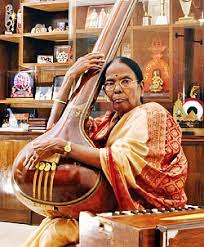
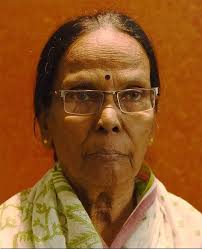
Shyamamani Pattnaik
Padma Shri, Odissi vocal legend, guru and composer
Notable Students
Gurus/Teachers
Biography
Achievements
- •Pivotal Role in Odissi Music: She is a leading figure in the preservation and promotion of Odissi music, a classical genre native to Odisha. Her work has been instrumental in systematically developing and codifying the grammar of this traditional music form.
- •Extensive Repertoire: Over her long career, she has recorded more than 4,000 songs, including classical Odissi, traditional folk, film, and adhunika songs.
- •Versatile Vocalist and Composer: Known for her soulful and melodious voice, she has enthralled audiences globally and is referred to by titles such as "Nightingale of Odisha" and "Kokilo Kanthi"
- •Early Start and Perseverance: She began her singing career at just 12 years old in 1950, singing at All India Radio Cuttack, overcoming significant societal opposition to pursue music.
- •Inspiring Documentaries: A documentary film titled "Shyamamani Devi - Odissi Classical Vocalist" was directed by Santosh Gaur in 2018, showcasing her life and work.
Awards & Honors
Legacy & Impact
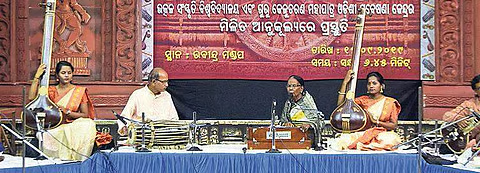
Shyamamani Pattnaik’s lasting impact is inseparable from the sound and pedagogy of contemporary Odissi music. At a historical moment when the dance was expanding rapidly beyond Odisha, her voice offered a reference grammar—clear diction, raga integrity unique to Odissi practice, and a dancer-aware sense of laya—that helped standardize how Odissi sahitya should be sung on stage and in studios. This “reference sound” has been internalized by accompanists, repertory companies, and soloists across India and in diaspora communities, anchoring stylistic continuity even as new choreography and production values evolve. Her chief innovation was not novelty for its own sake but the curatorial rigor with which she transmitted repertoire: carefully chosen versions of Gita Govinda ashtapadis, champus by Kavisurya and other poets, and Odia bhajans arranged to sustain abhinaya arcs. She advocated for Odissi-specific raga choices (for example, cautioning against substituting Hindustani analogues) and for the precise treatment of layakari typical of chhanda forms. By modeling a text-centered pedagogy that trains singers to serve dance, she reinforced the interdependence of Odissi music and Odissi dance, a foundational principle of the tradition’s classical status. Institutionally, her decades of teaching ensured that Odissi vocal did not become a bottleneck for the booming dance ecosystem: she produced accompanists and solo vocalists who could meet the high demands of repertory work, national festivals, and broadcast recordings. Many of her students now lead departments, adjudicate examinations, and run their own gurukuls, multiplying her influence. Archival recordings associated with her name are still consulted for pronunciation and raga-lakshana, and her lecture-demonstrations are cited in seminars at the Odissi Research Centre and universities. In public memory, she remains “Guruma,” a symbol of uncompromising musicality aligned to dance, and a guardian of Odissi music’s distinct identity against homogenizing currents in pan-Indian classical practice.
Videos
Gallery
Timeline
Birth
Born in Odisha into a culturally inclined Odia family in Banki, Cuttack district, Odisha.
Formal initiation in Odissi vocal
Began receiving formal classical music training under gurus including Pandit Singhari Shyamsundar Kar and Pandit Balakrushna Dash, with support from her father and uncle, Kalicharan Pattnaik.
AIR broadcasts begin
Started regular broadcasts from All India Radio, Cuttack/Bhubaneswar, building a public profile.
Further Training
Moved to Mumbai to pursue a course in voice culture under B.R. Deodhar and learned nuances of Thumri from Nirmala Devi and Pandit Lakhmi Shankar.
Major festival appearances
Featured vocalist for Odissi dance recitals and state cultural festivals.
Institutional teaching begins
Joined Odissi vocal faculty in Bhubaneswar (Utkal Sangeet Mahavidyalaya).
Doordarshan telecasts
Appeared in national broadcaster telecasts presenting Odissi repertoire.
Senior guru responsibilities
Assumed mentorship of advanced students and repertory coaching for productions.
AIR senior-grade recognition
Recognized as senior/top-grade artist for Odissi music broadcasts.
Seminars and lec-dems
Presented lecture-demonstrations on Gita Govinda interpretation and Odissi ragas.
Generational impact consolidates
Students begin to establish themselves as concert vocalists and teachers.
State and national felicitations
Received major state/national recognitions for lifetime contribution to Odissi music.
Documentary
A documentary film titled "Shyamamani Devi - Odissi Classical Vocalist" was directed by Santosh Gaur, chronicling her life and work.
Archival recognition
Retrospective features on AIR/Doordarshan and at Odissi festivals highlight her recordings and pedagogy.
Published on August 28, 2026 at 05:35 AM