Taalika Logo
    FestivalsEvents
    1. Home
    2. Deba Prasad Das

    Deba Prasad Das
    Deba Prasad Das
    Legend

    Deba Prasad Das

    Guru; First-generation Odissi Guru; Sangeet Natak Akademi Awardee

    1932 - 1986

    Notable Students

    Padma Shri Indrani Rahman
    Guru Durga Charan Ranbir
    Gajendra Kumar Panda
    Hare Krishna Behera

    Gurus/Teachers

    Kabichandra Kalicharan Pattnaik (mentor/producer; dramaturgy, music and stagecraft)

    Biography

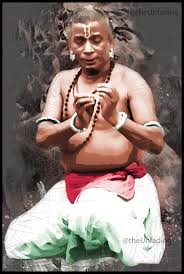
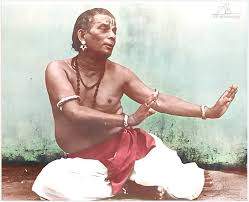
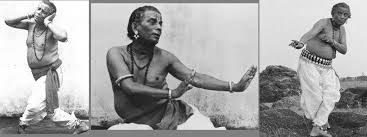
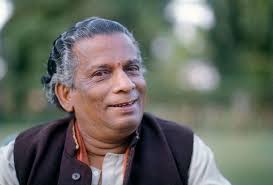
    Guru Deba Prasad Das (often styled simply as “Guru Deba Prasad”) is revered as one of the four pioneering architects of modern Odissi, alongside Pankaj Charan Das, Kelucharan Mohapatra, and Mayadhar Raut. Born in Odisha (widely recorded as 1932; exact day/month vary in different accounts), he grew up amid the state’s temple arts, folk and tribal cultures, and kirtan traditions—sources he would later draw upon to shape a distinctive Odissi idiom. As a youngster he showed talent for rhythm and mimicry; exposure to gotipua akhadas and dramatic troupes further heightened his interest. In his adolescence and early youth he trained in dance and theatre with local gurus and itinerant drama companies, and was professionally groomed by the legendary poet–playwright–producer Kabichandra Kalicharan Pattnaik, under whose tutelage he absorbed stagecraft, musicality, dramaturgy, and the art of working with live musicians and actors. (Some specific early-guru lineages are reported variably; the formative influence of theatre and gotipua/mahari/folk sources is consistently attested.) By the 1950s, with Odisha’s post-Independence cultural revival in full swing, Deba Prasad emerged as an exceptional performer-teacher and choreographer. He was an active participant in the Odissi codification efforts of the Jayantika collective (late 1950s–early 1960s), where he and fellow gurus discussed grammar, repertoire modules (mangalacharan, batu/sthai, pallavi, abhinaya, moksha), stance, torso articulation, and mnemonic syllables. Rooted deeply in Odishan ethos, he forged what is now identified as the Deba Prasad bani (style)—dynamic, earth-bound, rhythm-intensive, drawing strongly from tribal/folk vocabularies of southern and western Odisha, from gotipua akhadas, and from the temple (mahari) legacy. His hallmark was sabdaswarapata—spoken rhythmic/mnemonic patterns integrated with dance—that heightened the kinetic drive of nritta and created a pulsating dialogue with the mardala. His professional association with theatre companies made him a sought-after choreographer for dance-dramas and for solo numbers. A pivotal chapter was his collaboration with Padma Shri Indrani Rahman, whom he trained in Odissi beginning in the late 1950s. Through her national and international tours in the 1960s, Odissi burst into wider public consciousness; many of her early Odissi showpieces—or their rhythmic architectures—were created or set by Guru Deba Prasad, with his signature cadences, striking sculpturesque poses, and vigorous footwork. This partnership decisively helped establish Odissi on the national stage and introduced global audiences to the form’s grammar and aesthetics. In 1964, the establishment of Utkal Sangeet Mahavidyalaya (Bhabaneswar) gave Odissi a crucial institutional base, and Guru Deba Prasad served on its dance faculty, training several generations of dancers. His classroom was known for exacting tala work, a stress on precision in chowka and tribhangi, and for call-and-response with mardala bols. He encouraged students to cultivate stamina, clarity of line, and dramatic credibility in abhinaya, but without theatrical excess. He composed and re-set several pallavis and abhinaya numbers, often foregrounding rhythmic dialogue and sabdaswarapata as aesthetic elements rather than merely training tools. He also mentored students within and beyond Odisha, building a pan-Indian student body that later carried his bani to Delhi, Kolkata, and abroad. Stylistically, his contributions include stabilizing a distinctive sthai/sthayee nrutta segment (akin in placement to batu within the Odissi margam, but with bani-specific body kinetics), developing crisp, drum-driven nritta passages, and bringing into Odissi a texturing of movement influenced by folk/tribal idioms that he had studied closely. He worked closely with mardala exponents and singers—insisting that dance phrasing and rhythmic recitation be inseparable—and was known to personally recite and design ukutas (mnemonic syllables) during rehearsals. His choreography was cinematic in its transitions yet thoroughly anchored to the Odissi torso grammar. Personally, he was remembered as warm but formidable in the studio: a guru who led from the front, dancing full-throttle alongside students, drilling them through long cycles of tihais and complex layakari, and then switching into abhinaya coaching with nuanced musical cues. Colleagues recall his generosity in collaborative forums like Jayantika, where he debated aesthetics with conviction but also adapted compositions to suit a dancer’s personality. In the late phase of his career (early–mid 1980s), he consolidated teaching, created new pieces for senior students, and remained an influential voice in Bhubaneswar’s cultural scene. He passed away in 1986 (year confidently attested), leaving a robust pedagogic lineage and a large body of compositions and stylistic principles that continue to be taught as the Deba Prasad gharana of Odissi. Today, his bani is carried forward by disciples and their students in Odisha, Delhi, and internationally. Signature features—sabdaswarapata, the muscularity of nritta, emphatic chowka, and the rhythmic–kinetic dialogue with mardala—mark his enduring stamp on Odissi’s modern identity.

    Achievements

    • •1950s - Emerged as performer–teacher in Odisha’s theatre and dance circuits; associated with Kabichandra Kalicharan Pattnaik’s productions (year range)
    • •1957–1964 - Active participant in the Jayantika collective that codified Odissi technique, repertoire order, and stage practice
    • •Late 1950s - Began training Padma Shri Indrani Rahman in Odissi; created/showcased early solo items for national platforms
    • •1960s - Choreographed and set multiple pallavis and abhinaya items noted for sabdaswarapata and strong nritta architecture
    • •1964 - Joined the founding faculty of Utkal Sangeet Mahavidyalaya, Bhubaneswar (Odissi Dance)
    • •1960s–1970s - Conducted workshops and lec-dems across India; mentored a pan-Indian cohort of students
    • •1977 - Received Sangeet Natak Akademi Award (Odissi)
    • •Late 1970s–1980s - Consolidated the Deba Prasad bani through advanced training of senior disciples who later opened institutions
    • •1980s - Recognized statewide as a leading Odissi guru, examiner, and repertory builder for institutions in Odisha
    • •1986 - Passed away, leaving a substantive body of compositions and a robust pedagogical lineage

    Awards & Honors

    1977 - Sangeet Natak Akademi Award (Odissi) - Sangeet Natak Akademi
    1970s (year uncertain) - Odisha Sangeet Natak Akademi Award/State Honours (Dance) - Odisha Sangeet Natak Akademi (confidence: medium)

    Legacy & Impact

    Guru Deba Prasad Das’s impact on Odissi is both structural and stylistic. Structurally, he was integral to the Jayantika-era standardization that yielded the now-familiar Odissi margam; his persistent advocacy of rhythm-first pedagogy ensured that nritta segments would not be mere connective tissue but core, sculpted edifices within a recital. Stylistically, he developed a bani that valorized the percussive heart of Odissi: sabdaswarapata as performative energy, taut chowka with pronounced weight-shifts, and an idiom that absorbed folk/tribal movement qualities without diluting classical grammar. This has proved enormously influential, giving Odissi a spectrum—from lyrical/lasya dominant approaches to the more drum-driven, kinetic aesthetic of the Deba Prasad school—within a shared codified framework. His training of Padma Shri Indrani Rahman catalyzed Odissi’s early national and international recognition. As she toured, the compositions and rhythmic sensibilities he shaped reached festivals, embassies, and universities, seeding curiosity and subsequent student streams. Inside Odisha, his classes at Utkal Sangeet Mahavidyalaya professionalized teaching protocols: insistence on tala literacy, ukuta recitation, and the intimate dancer–drummer conversation became hallmarks. The persistence of sabdaswarapata in numerous schools today—whether directly descended from his bani or influenced by it—attests to his lasting imprint. He is also remembered for reframing the relationship between Odissi and Odisha’s plural performance cultures. By openly drawing from folk and tribal idioms, he argued (in practice and pedagogy) that classical authenticity rests not on exclusion but on rigorous integration under a governing grammar. Many of his disciples and “grand-disciples” have built institutions, festivals, and repertory works that continue to foreground rhythmic craft and the sthai/sthayee nrutta unit he championed. In commemorations, lec-dems, and gharana-focused festivals (e.g., celebrations of the Deba Prasad bani by troupes in Bhubaneswar and Delhi), his name is invoked as a benchmark of uncompromising rhythmic artistry and stage vitality. His legacy is thus double: he helped fix the skeleton of modern Odissi, and he endowed it with a heartbeat whose pulse—mardala-led, sabdaswarapata-voiced—still animates the form on stages worldwide.

    Videos

    Gallery
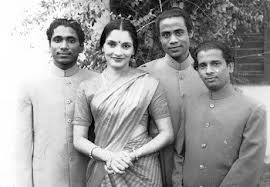
    Guruji with Indrani Rahman
    Rare abhinaya sequence
    Rare abhinaya sequence

    Timeline

    1932

    Birth

    Born in Odisha (exact date/place vary across sources).

    1940

    Early exposure to performance

    As a child/teenager, watched and absorbed gotipua, folk, and theatre performances (indicative timeline).

    1948

    Initial professional training

    Entered theatre/dance circuits; began learning from local gurus and drama companies (indicative).

    1952

    Joined major theatre troupe

    Began significant association with Kabichandra Kalicharan Pattnaik’s productions (approximate).

    1957

    Jayantika involvement begins

    Participated in the Jayantika movement to codify Odissi.

    1958

    National visibility

    Early national showcases of the emerging Odissi form in seminars/festivals; his compositions began to circulate (indicative).

    1959

    Training of Indrani Rahman

    Began training Padma Shri Indrani Rahman in Odissi; set signature solos.

    1961

    International exposure via student’s tours

    Through Indrani Rahman’s international concerts, his choreographies reached wider audiences.

    1964

    Institutional appointment

    Joined founding faculty of Utkal Sangeet Mahavidyalaya (Odissi).

    1968

    Expanding pedagogy

    Workshops, lec-dems and student training across India; bani formalization.

    1977

    National honour

    Received Sangeet Natak Akademi Award for Odissi.

    1982

    Senior disciples establish institutions

    His students began to found schools/companies that carried the bani forward (e.g., in Bhubaneswar and Delhi).

    1985

    Late career creations

    Created/updated advanced items with pronounced sabdaswarapata and rhythmic play.

    1986

    Demise

    Passed away, leaving a vibrant lineage and substantial repertoire.

    Published on November 2, 2025 at 06:10 AM by Taalika Admin

    Taalika
    AboutWhy TaalikaContactHelpPricingVolunteerTermsCMS

    © 2025 Taalika. All rights reserved. A product of Oryid Lab Pvt Ltd.