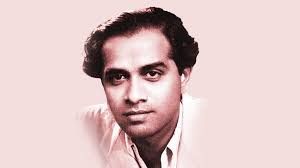
About
Bhubaneswar Mishra (often styled in Odia circles as “Pt. Bhubaneswar Mishra”) was one of the pivotal musician-composers who gave modern Odissi dance its distinctive musical architecture in the mid-twentieth century. Born in Paralakhemundi, a town in the Gajapati district of Odisha, he displayed an early aptitude for melody and bowed string instruments, gravitating to the violin as his primary voice. Growing up amid Odisha’s temple and folk soundscapes, he absorbed the Odissi musical idiom even as he trained rigorously in Hindustani classical violin technique. Family encouragement (and access to local akhadas and music circles) brought him into contact with senior Odia musicians and All India Radio (AIR) artistes at a young age, and by his late teens he was already performing in Cuttack’s vibrant music milieu.
His initial training combined formal talim on the violin with close listening to Odissi vocalists and percussionists. In addition to violin pedagogy from senior gurus (and sustained riyaaz in Hindustani techniques), he immersed himself in Odissi raga aesthetics under senior Odia maestros and learned the grammar of tala from eminent mardala exponents. Crucially, his proximity to AIR, Cuttack, gave him a laboratory in which to hone orchestration, accompaniment sensitivity, and the craft of composing for dance and drama. By the mid-1950s he was a sought-after accompanist and arranger for music broadcasts, theatre, and emerging Odissi dance recitals.
The formative turning point of his career coincided with the historic Jayantika movement (late 1950s–early 1960s), the collective of Odissi gurus, musicians, and scholars that codified Odissi’s modern repertoire and stage grammar. Working alongside dance masters such as Kelucharan Mohapatra, Pankaj Charan Das, Deba Prasad Das, and Mayadhar Raut, and in dialogue with vocalists and mardala vidwans, Mishra helped systematize the sound-world that Odissi dance would carry to the nation and the world. As a violinist-composer, he became indispensable in creating and consolidating the form of the pallavi—an abstract nritta composition that unfolds a raga through lyrical melodic elaboration and architectural rhythmic design. His pallavi scores, celebrated for long-lined lyricism, raga clarity, and keen kinesthetic sensitivity to movement, became templates that generations of dancers have retained in active repertoire.
From the 1960s onward, Mishra served as accompanist and music director for major Odissi productions and for leading dancers on concert stages across India and abroad. His musical partnerships with Kelucharan Mohapatra, and with vocalist colleagues such as Raghunath Panigrahi and Balakrushna Dash, yielded landmark dance-dramas and abhinaya settings (especially on Jayadeva’s Gita Govinda) that defined Odissi’s expressive idiom for international audiences. He was celebrated for a violin tone that balanced Hindustani-schooled intonation with the curved gamaka and meend contours dear to Odissi singing, and for an arranger’s ear that placed mardala, bansuri, manjira, and voice in proportion so that dance remained sovereign while music breathed expansively.
A deeply respected teacher and ensemble leader, Mishra mentored younger accompanists—violinists, flautists, and percussionists—through patient handholding in rehearsals and on stage. His pedagogy emphasized three interlocking values: textual fidelity (to sahitya, raga, and tala), dancer-centric sensitivity (phrasing that supports angika and abhinaya), and quiet innovation (introducing fresh raga choices or bridge phrases without violating Odissi grammar). Students and associates recall his rehearsal discipline, the insistence on clear cueing and eye-contact with the dancer, and the care with which he reshaped melodic lines once choreography settled. He was equally at home composing for mangalacharan and batu nritya (where rhythmic architecture is paramount) and for abhinaya (where sahitya shading and sangati-building are central).
In the later decades of his career (1980s into the early 1990s), Mishra was closely associated with institutional efforts in Bhubaneswar to train accompanists and to document Odissi compositions, contributing as music director/consultant and senior guru in ensembles and at workshops. He continued to tour, record for AIR and television, and set new pallavis and dance-dramas for leading dancers and companies. Colleagues recall his soft-spoken manner, meticulous rehearsal notes, and a craftsman’s pride in balance and intonation. His final years were devoted to consolidation—handing down working scores, encouraging younger musicians to read, notate, and rehearse systematically, and ensuring that the Odissi stage would not be dependent on a single star but on a robust ecosystem of trained accompanists. He passed away in the early 1993, leaving behind a large but largely oral body of compositions that still serve as the living soundtrack of Odissi dance.
Legacy & impact
Bhubaneswar Mishra’s most enduring legacy is the very sound-image of Odissi dance that audiences recognize today. At a historical moment when the form was being codified for the proscenium, his violin—and more broadly, his composer’s sensibility—stitched together raga, tala, and choreography into a seamless dramaturgy. He demonstrated how Odissi’s music could be both classically rigorous and kinetically responsive, allowing the dancer’s body to breathe within an elegant, proportionate score. In particular, his pallavi compositions established an Odissi-specific grammar for abstract dance that has since become canonical: a slow, spacious alapa-like opening; a clear sthayi motif; progressive layakari and sangatis; and climactic nritta passages that resolve with grace rather than bombast.
Equally important was his role in professionalizing the accompanist’s craft. Mishra modelled how an ensemble can be led from the violin—discreetly cueing, leaving space for mardala theka, supporting vocalist phrasing, and responding to the dancer’s improvised micro-moments. That ethos influenced generations of Odissi orchestras in India and across the diaspora, where his melodic turns and cadential figures are still taught as idiomatic. By insisting on raga integrity (including Odissi’s indigenous raga-ang traditions) while remaining open to dialogue with Hindustani technique and modern staging needs, he helped Odissi music articulate its own identity distinct from both Hindustani and Carnatic templates.
Institutionally, his contribution to the training of accompanists—through AIR, rehearsal rooms, and Bhubaneswar-based initiatives—helped seed a pipeline of violinists and flautists who could read a dance rehearsal, speak the same tala language as mardalikas, and deliver under performance pressure. Many of his mentees went on to become fixtures on Odissi stages. His work is remembered annually in Odisha’s dance circles through commemorative concerts, and his compositions continue to be performed by leading dancers. In scholarship and lecture-demonstrations on Odissi history, his name is consistently invoked as one of the architects of the dance’s modern musical repertoire.
Timeline
- 1927Birth in in Paralakhemundi, Gajapati, OdishaBorn into a culturally rich Odia milieu; early exposure to temple and folk musics.
- 1948Began formal violin training and early concert appearancesCommenced structured talim on violin; performed in local music circles.
- 1952Association with All India Radio, CuttackBecame a regular violinist/arranger for AIR broadcasts, expanding orchestration skills
- 1957Jayantika involvementParticipated in the Jayantika collective that codified Odissi’s stage grammar alongside leading gurus.
- 1960Early pallavi compositions enter repertoireHis pallavis begin to be widely performed by Odissi dancers, shaping the abstract nritta score.
- 1964National touring with Odissi ensemblesTours across India with leading Odissi dancers; develops signature ensemble balance.
- 1968International exposure of OdissiAccompanies/serves as music director for overseas performances that introduce Odissi music to global audiences.
- 1975Music direction for major dance-dramasScores full-length Odissi productions for institutions and troupes.
- 1980Mentorship of accompanistsBegins focused mentoring of violinists, flautists, and percussionists for Odissi stages.
- 1986Institutional association in BhubaneswarWorks with Bhubaneswar-based bodies to systematize teaching/documentation of Odissi music.
- 1990Late-career compositions and recordingsContinues composing and recording for AIR/Doordarshan; hands down working scores.
- 1993DemisePasses away in 1993