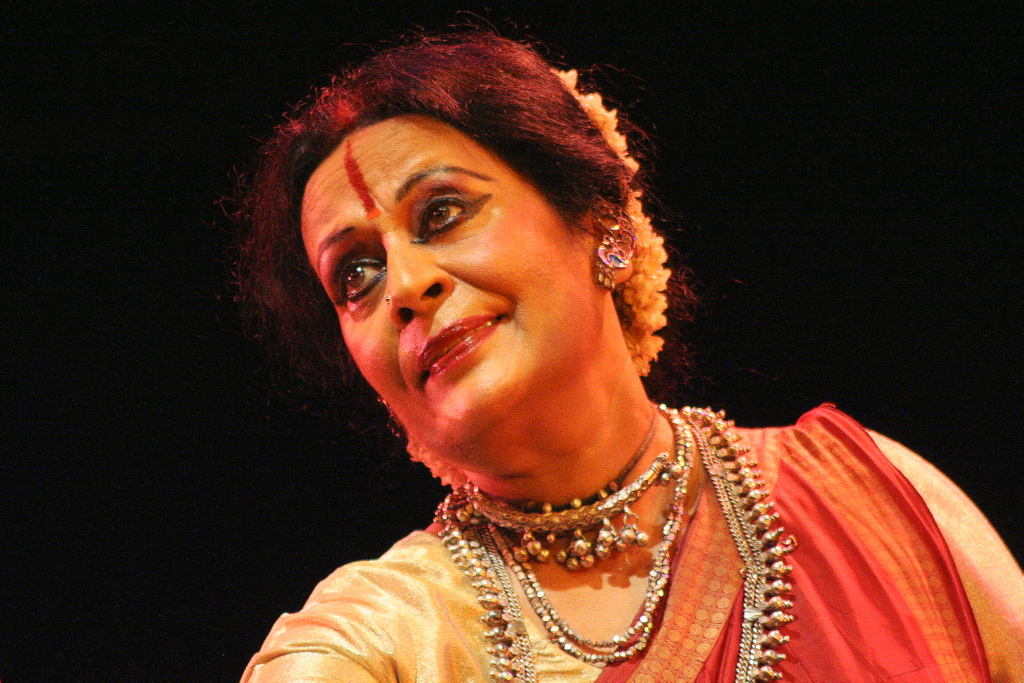
Sonal Mansingh
Odissi Guru
Guru, Odissi and Bharatanatyam exponent; Founder-President, Centre for Indian Classical Dances (CICD); Nominated Member of Rajya Sabha
Padma Vibhushan Sonal Mansingh (born 1944-04-30, Bombay [now Mumbai]) is one of India’s most distinguished classical dancers, celebrated primarily for her Odissi while remaining deeply trained in Bharatanatyam and con…
About
Padma Vibhushan Sonal Mansingh (born 1944-04-30, Bombay [now Mumbai]) is one of India’s most distinguished classical dancers, celebrated primarily for her Odissi while remaining deeply trained in Bharatanatyam and conversant with several allied Indian traditions. She was born into a culturally engaged Gujarati family; her mother, the Gandhian social worker Padma Bhushan Poornima Pakvasa, and her illustrious maternal grandfather, freedom fighter and governor Mangaldas M. Pakvasa, created an environment steeped in patriotism, public service, and art. This upbringing cultivated in the young Sonal a profound respect for India’s aesthetic and intellectual heritage, especially Sanskritic literature, which would later become a hallmark of her choreographic oeuvre.
Her initiation into dance began remarkably early. As a child she studied Manipuri (widely attributed to her early lessons with the Bombay-based Manipuri milieu connected to Guru Bipin Singh) before she moved seriously into Bharatanatyam during her pre-teens. In her mid-teens she undertook rigorous Bharatanatyam training with established gurus (notably the Bengaluru school of U.S. Krishna Rao and his partner in pedagogy, the renowned teacher-choreographer Chandrabhaga Devi), absorbing technique, adavus, and abhinaya in the classical Tanjavur tradition. The decisive turn to Odissi came in the mid-1960s when Mansingh sought the then-reviving idiom at its source in Odisha. She commenced training under the legendary Padma Vibhushan Kelucharan Mohapatra, whose meticulous codification of the Odissi grammar (bhangis, tribhangi, chauka, lasya–tandava balance) and abhinaya was foundational for her. She also spent time learning from other senior Odissi masters, including Padma Shri Mayadhar Raut (especially for abhinaya and classical textual interpretation), building an eclectic yet classical command of the idiom.
Mansingh’s professional debut in Odissi during the later 1960s quickly drew national attention for her arresting stage presence, seamless command over nritta and abhinaya, and her scholarship-driven introductions to items that foregrounded the literary core of the repertoire—Jayadeva’s Gita Govinda, Sanskrit stotras, and medieval Odia poetry. Through the 1970s she toured extensively in India and abroad, bringing Odissi to major cultural capitals in Europe, the erstwhile Soviet Union, North America, and Southeast Asia. A turning point in her personal life and career came with a serious car accident around 1979 that resulted in grave spinal injuries; medical opinion suggested she might never dance again. Defying prognosis through fierce discipline and yogic-physiotherapeutic regimen, she returned to the stage within months, an episode that became emblematic of her resilience and work ethic.
In 1977 she founded the Centre for Indian Classical Dances (CICD) in New Delhi, which has served as her principal gurukul for several generations of students in Odissi and related arts. Her teaching philosophy blends uncompromising training in technique with parallel cultivation of a dancer’s mind—Sanskrit poetics (alankara-shastra), Indian aesthetics (rasadhvani), iconography, mythology, musicology, yoga, and the ethics of sadhana. Rehearsals often begin with textual reading and meaning—word-by-word anuvada—of the sahitya to sharpen abhinaya. She insists that choreography must be literature-led rather than spectacle-driven, and that a performer’s daīnik sadhana (daily practice) is inseparable from their svadhyaya (self-study).
Across five decades, she created and danced a stream of significant choreographies. Among the most noted are women-centric narrative suites such as Panchkanya (exploring Ahalya, Draupadi, Kunti, Tara, and Mandodari), thematic works on Devi in her multiple manifestations, meditations on Krishna and the Gita Govinda, and socio-civilizational reflections like Mera Bharat and Aatmayan that braid classical vocabulary with contemporary concerns without diluting the grammar. These works are distinguished by their tight dramaturgy, sophisticated sahitya selection in Sanskrit, Odia, Hindi, and occasionally Gujarati, and musical design that respects Odissi raga–tala architecture while exploring expanded orchestration.
Besides performing, Mansingh has been an influential arts leader and public intellectual. She has served on national cultural bodies and committees, curated festivals, mentored young companies, and delivered lecture-demonstrations at universities in India and abroad, often emphasising the continuity between temple, text, and theatre in Indian dance. In 2018 she was nominated to the Rajya Sabha, India’s Upper House of Parliament, in recognition of her service to culture, giving her a platform to advocate policy support for classical arts, artist welfare, and heritage education.
Her personal style is marked by clarity of line in chauka, fluidity in tribhanga, a keenly etched mukhaja-abhinaya, and dramaturgical intelligence that never sacrifices classical integrity for effect. Senior critics have often noted her ability to build long, nuanced sanchari bhavas that grow organically from the sahitya, yielding rasa that feels both traditional and immediate. In her later decades, while she continues to appear in select productions, Mansingh devotes substantial time to teaching at CICD, mentoring repertory dancers, guiding research-based choreographies, and preserving archival material from her tours and productions. She remains an iconic figure, her journey exemplifying the Odissi renaissance that took the form from a regional revival to a globally recognized classical tradition.
Legacy & impact
Sonal Mansingh’s lasting legacy is inseparable from the modern history of Odissi’s ascent to national and international prominence. Coming of age as Odissi was being rebuilt from temple and theatrical traditions into a concert form, she became one of its most articulate and visible exponents, carrying the grammar of chauka, tribhangi, lasya, and abhinaya to audiences far beyond Odisha. Her tours—beginning in the late 1960s and intensifying through the 1970s–1990s—translated Odissi into an international cultural language, helping secure its place alongside Bharatanatyam and Kathak in the global imagination of Indian classical dance.
Her innovations were not about hybridising the form but about deepening it through text-led dramaturgy. By curating sahitya with scholarly care—Jayadeva’s ashtapadis, Sanskrit stotras, medieval Odia and Braj poetry—and by constructing productions such as Panchkanya and Devi suites, she reframed Odissi as a vehicle for complex psychological portraits, especially of women in epic and Puranic literature. This emphasis on meaning-driven abhinaya, supported by rigorous nritta, shaped expectations for Odissi choreography in urban proscenium contexts, influencing younger choreographers to seek literary and philosophical depth rather than episodic spectacle.
As a teacher, her insistence on holistic formation—combining technique with Sanskrit poetics, music, iconography, and yogic practice—has seeded a pedagogy that many of her disciples and mentees carry forward in India and abroad. The Centre for Indian Classical Dances (CICD), which she founded in 1977, continues to function as a gurukul producing performers, teachers, and choreographers who treat dance as sadhana. Her recovery from a near-crippling accident to reassert her stage career has also become a motivational touchstone for dancers, underscoring resilience, discipline, and the integration of body-mind-spirit in training.
Institutionally, Mansingh’s leadership roles and her 2018 nomination to the Rajya Sabha amplified the voice of the classical arts in public policy, from artist welfare to heritage education. She is remembered today not only as a stage luminary but as a cultural stateswoman: an articulate advocate for the arts’ civilizational value, a bridge between scholarship and performance, and a guardian of Odissi’s aesthetic core. Her legacy is visible in the repertories that cite her productions, in the teaching syllabi that echo her literature-first approach, and in the sustained visibility of Odissi on international stages. She remains a touchstone for artistry anchored in tradition yet responsive to contemporary questions.
Timeline
- 1944BirthBorn on 30-04-1944 in Bombay (Mumbai), into the distinguished Pakvasa family.
- 1951Early training beginsInitiated into Indian classical dance as a child; early exposure to Manipuri and subsequently Bharatanatyam.
- 1956Serious Bharatanatyam trainingPursued rigorous Bharatanatyam under U.S. Krishna Rao and Chandrabhaga Devi (Bengaluru school).
- 1965Turn to OdissiBegan intensive Odissi training under Padma Vibhushan Kelucharan Mohapatra in Odisha; also learned from Padma Shri Mayadhar Raut.
- 1967Professional Odissi debutCommenced professional Odissi performances; early acclaim for abhinaya and command of grammar
- 1970International toursEmbarked on overseas tours to Europe, USSR, North America, and Southeast Asia, taking Odissi to global stages.
- 1977Founded CICDEstablished the Centre for Indian Classical Dances (CICD) in New Delhi as her gurukul and repertory base.
- 1979Accident and comebackSurvived a serious car accident leading to spinal injuries; returned to the stage within months through intense rehabilitation.
- 1987SNA AwardReceived the Sangeet Natak Akademi Award (Odissi).
- 1992Padma BhushanConferred the Padma Bhushan by the Government of India.
- 1995Panchkanya productionPremiered/expanded the women-centric suite Panchkanya, among her signature choreographies.
- 2003Padma VibhushanConferred the Padma Vibhushan, India’s second-highest civilian honour.
- 2017Biography publishedPublication of a detailed biography on her life and work by Sujata Prasad.
- 2018Rajya Sabha nominationNominated to the Rajya Sabha, India’s Upper House of Parliament, for contributions to arts and culture.
- 2020Digital pedagogyExpanded online teaching, mentoring, and archiving through CICD during the pandemic era.