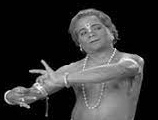
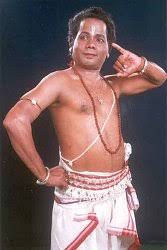
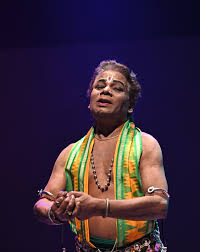
Durga Charan Ranbir
Padma Shri, Odissi guru, choreographer, educator; leading exponent of the Deba Prasad Das gharana
Notable Students
Gurus/Teachers
Biography
Achievements
- •1970s - Intensive training under Deba Prasad Das at Utkal Sangeet Mahavidyalaya, Bhubaneswar
- •1970s - Began professional performances in Odisha and across India.
- •c. early 1980s - Joined the faculty of Utkal Sangeet Mahavidyalaya as Odissi dance instructor.
- •1986 - After the demise of Deba Prasad Das, undertook active stewardship of the Deba Prasad gharana repertory and pedagogy
- •c. late 1980s–1990s - Presented and restaged seminal Deba Prasad compositions; reconstructed sabda-swara-pata passages.
- •1993 - Founded his own Odissi training institute Nrityayan in Bhubaneswar to propagate the Deba Prasad style.
- •1990s–2000s - Regular presentations at national dance festivals such as Konark, Khajuraho, and Mukteswar
- •2000s - Served in senior academic/mentoring roles at Utkal Sangeet Mahavidyalaya; guided M.A./M.Phil. students and exam syllabi
- •2010s - Created and staged new choreographies that consolidated gharana-specific technique and dramaturgy.
- •2013 - Received the Sangeet Natak Akademi Award for Odissi
- •2025 - Received Padma Shri
Awards & Honors
Legacy & Impact
Durga Charan Ranbir’s most enduring legacy is his steadfast custodianship of the Deba Prasad Das gharana of Odissi at a time when homogenization threatened to erase gharana-specific textures. By codifying training progressions, restoring sabda-swara-pata passages, and retaining the muscular, earth-bound energy of the style, he safeguarded a valuable aesthetic lineage and ensured that students could access it with clarity and rigor. His decades of teaching at Utkal Sangeet Mahavidyalaya created a pipeline of well-trained dancers who, in turn, seeded institutions and repertory ensembles across India and the diaspora, transmitting the gharana to new contexts without losing its core identity. Ranbir’s insistence on tala literacy and mardala-dialogue sensitized a generation of dancers to rhythmic architecture as the foundation of Odissi. This emphasis has shaped how many performers now build and present pallavis and nritta sequences, privileging clarity of layakari, dynamic use of stillness, and the satisfying weight of chauka over superficial flourish. His revival and systematization of sahi nata-derived idioms, and his dramaturgical approach to abhinaya, have likewise broadened the canon of what is considered ‘classical’ within Odissi, keeping alive the porous boundary between ritual-folk and temple-classical that historically characterized the form. Internationally, Ranbir’s students and collaborators have brought the Deba Prasad style to stages and classrooms across North America, Europe, and East Asia, expanding both audience awareness and practitioner networks. Within Odisha, he stands as a reference point for style-specific authenticity: organizers and institutions routinely seek his mentorship for curations that require a Deba Prasad lens. Today he is remembered not only as a formidable teacher and choreographer but also as a thinker-practitioner whose work demonstrates that tradition thrives best when its grammar is precisely transmitted and critically understood. His impact is visible in the repertories of numerous younger artists, in the syllabi of institutions that reflect his pedagogy, and in the continuing appeal of a distinct Odissi voice that he helped keep vibrant.
Videos
Gallery
Timeline
Birth
Born in Odisha, India
Early exposure to Odia folk/ritual forms
Introduced to community and ritual performance practices that later shaped his aesthetics
Formal Odissi training begins
Commenced rigorous Odissi training; soon came under Guru Deba Prasad Das at Utkal Sangeet Mahavidyalaya, Bhubaneswar
Early professional performances
Began performing widely in Odisha and neighboring states
Joined teaching faculty
Started teaching Odissi at Utkal Sangeet Mahavidyalaya, Bhubaneswar
Stewardship of Deba Prasad gharana
Following the demise of Guru Deba Prasad Das, took up active custodianship of the gharana’s repertory and pedagogy
Reconstruction and notation initiatives
Systematized sabda-swara-pata passages and documented key compositions for pedagogy
Established Nrityayan in Bhubaneswar
Founded an Odissi school to disseminate the Deba Prasad style
National festival circuit
Regular presentations at Khajuraho, Konark, and other national festivals
Senior academic mentor
Guided advanced students and contributed to curriculum and examination frameworks at USM
Sangeet Natak Akademi Award
Honored with the national SNA Award for Odissi
New choreographies premiered
Presented new works consolidating gharana identity while engaging contemporary audiences
Padma Shri
Conferred by the Government of India for distinguished service in the field of art.
Published on November 2, 2025 at 06:10 AM by Jayanta Mohapatra