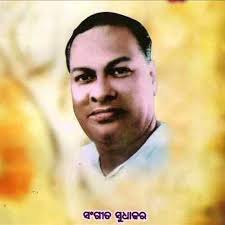
Balakrushna Dash
Odissi Guru · 1923–1993
Sangeet Sudhakar; Odissi music maestro, vocalist–composer, lyricist; Guru and music director
Balakrushna Dash, affectionately revered across Odisha as “Sangeet Sudhakar,” was among the most influential architect–practitioners of Odissi music in the 20th century.
About
Balakrushna Dash, affectionately revered across Odisha as “Sangeet Sudhakar,” was among the most influential architect–practitioners of Odissi music in the 20th century. Born into a culturally rooted Odia family at Basantapedi, Puri, Odisha, he grew up listening to temple music, Jagannath bhajans, and the richly poetic Odia song tradition that would later form the backbone of Odissi dance abhinaya. His musical sensibilities were shaped early by devotional environments and community theatre, where the fusion of music, poetry, and dramaturgy was part of everyday life. From childhood, he displayed a resonant voice, a keen ear for raga nuance, and an instinct for marrying melody to Odia prosody. Family elders encouraged him to pursue formal training, and by his teens he had sought rigorous tutelage in Odissi/Odia vocal traditions, Hindustani frameworks that inform Odissi raga–rasa, and the repertoire of classical–devotional poets like Jayadeva, Upendra Bhanja, Kabi Surya Baladeba Ratha, Banamali, and Gopalakrushna Pattnaik.
His formative training included guidance from senior Odissi/Odia music exponents active in the pre- and early post-Independence era. As radio became a powerful cultural platform, Dash’s association with All India Radio (AIR) Cuttack proved decisive. There, as a performing vocalist, composer, and later as a senior resource person, he helped shape the grammar of broadcast Odissi music—standardizing pitch modalities for ensembles, selecting canonical texts suited to dance, and curating raga–tala presentations that were faithful to Odissi aesthetics while intelligible to a wider, modern audience. His AIR recitals of bhajans, champus, chhandas, and pada poetry became benchmarks; many dancers and teachers kept his recordings as reference for abhinaya and classroom teaching.
By the 1950s–60s, as Odissi dance was undergoing its historic resurgence on the proscenium, Dash emerged as a vital link between music and dance. He coached dancers in diction, prosody, and sang for rehearsals and recitals; his concert renditions informed the interpretive strategies of abhinaya. He worked with Odissi gurus and leading dancers—helping align the musical phrase with angika (movement) and satvika (expressive) content. Many of the most cherished Odissi abhinayas on Odia texts gained public currency through his voice and settings; his treatments balanced bhava (emotional tenor) with the classicality of Odissi raga–tala, emphasizing the Odia language’s cadences. Alongside broadcast, he contributed to stage and, increasingly, cinema—serving as singer, lyricist, and music director for Odia theatre/film projects. In cinema, he helped bring classical Odia melody and devotional flavour into popular idioms, influencing an entire generation of Odia playback.
A dedicated guru, Dash mentored a wide circle of vocalists who would themselves become pillars of Odissi music in performance, research, and pedagogy. His teaching emphasized text integrity (sahitya shuddhata), clear enunciation, and the primacy of raga–rasa—the ability of the raga to carry the emotive image of the poem. He insisted students read the poets in depth, understand the dramaturgy of Odissi, and internalize tala structures native to the tradition (such as ektali, tripata, jati talas used locally), rather than retrofitting Hindustani expectations. He was equally at home in the studio, on stage, and in the classroom—insisting on disciplined riyaaz, sensitivity to microtonal movement characteristic of Odissi ragas, and a listener-first aesthetic. His rehearsals were famous for long, iterative phrase work; he would re-sculpt a sangati until the image in the text “clicked” with the musical gesture.
From the mid-1960s through the 1980s, Dash was a ubiquitous presence at festivals, AIR National Programmes, Odissi dance recitals, and major cultural events in Odisha. He served as a resource for repertories being codified for institutional training at emerging centres like Utkal Sangeet Mahavidyalaya and at the Odisha Sangeet Natak Akademi’s productions and workshops. His recorded legacy—HMV/Gramophone/Doordarshan/AIR archives—preserves classic renderings of Jayadeva’s Gita Govinda as used in Odissi dance, along with Odia abhinaya padas that today form part of the mainstream Odissi concert.
Personally, contemporaries remember Dash as soft-spoken but exacting, with a deep devotional core and a scholar’s respect for textual nuance. He balanced tradition with accessibility: maintaining Odissi’s distinctive raga identity (such as Kalyana, Kedara Kamodi, Khamaj, Mukhari, and rare raginis in Odissi usage) while trimming excessive ornamentation that could cloud the poem. In later years, he became a revered elder of the community—continuing to teach, advise festivals and examinations, and mentor young artists even as health reportedly began to limit travel (medium confidence on specific health details). He passed away in 1993, leaving behind a towering legacy embedded in the sound and shape of modern Odissi music—an indispensably musical pillar of the Odissi dance renaissance.
Legacy & impact
Balakrushna Dash’s legacy is inseparable from the consolidation of Odissi as a modern classical system. As Odissi dance re-emerged on national and international stages in the 1950s–70s, it needed a parallel musical revival—credible, codified, and aesthetically distinct from Hindustani or Carnatic templates. Dash was one of the key figures who provided that musical backbone. His broadcast work at AIR Cuttack and countless stage appearances standardized how Odia classical–devotional poetry could be rendered for dance: the gait of the tala, the curvature of the melodic line, and the conversational relationship between sahitya and abhinaya. Generations of dancers learned the diction, phrasing, and raga–rasa of Odissi abhinaya through his recordings, which continue to be cited in classrooms and rehearsals today.
Artistically, he helped stabilize Odissi-specific raga procedures—phrases, nyasa points, and chalan—so that the regional raga ethos remained recognizably Odissi even as it interfaced with national circuits. He championed Odia literary canons within the recital, ensuring poets like Jayadeva, Upendra Bhanja, Kabi Surya Baladeba Ratha, Banamali, and Gopalakrushna Pattnaik remained centerstage in dance-music practice. This anchored Odissi’s identity in its home language while allowing universal communicability through raga–tala craft. His approach—devotional yet dramaturgically alert—made Odissi abhinaya intelligible to audiences outside Odisha, facilitating Odissi’s global spread.
Pedagogically, his emphasis on text integrity and raga character shaped today’s Odissi pedagogy. Many of his disciples became transmitters of the tradition, carrying forward his exacting standards in conservatories, universities, and private gurukuls. In the recording studio and on AIR, he set benchmarks for microphone technique, ensemble balance, and repertoire curation—benchmarks that later music directors and vocalists adapted for both dance accompaniment and independent Odissi music concerts. He is remembered at commemorative festivals, lecture-demonstrations, and radio retrospectives across Odisha. In the living memory of the field, the timbre and phrasing he modelled remain prototype references for Odissi abhinaya singing—a lasting imprint on how the dance “sounds” to this day.
Timeline
- 1923BirthBorn into an Odia family steeped in devotional and literary culture at Basantapedi, Puri, Odisha
- 1930Early musical exposureImmersed in temple music, bhajans, and Odia poetic forms; early promise as vocalist
- 1940Formalization of trainingAdvanced tutelage in Odissi/Odia vocal forms, raga–tala structures, and classical–devotional repertoire
- 1948Association with AIR CuttackBegan regular broadcasts that would define his public profile.
- 1952Coaching for Odissi danceActive mentoring of Odissi dancers/gurus during the form’s stage revival; singing for rehearsals and recitals.
- 1958National Programme appearancesFeatured in AIR national broadcasts that disseminated Odissi music beyond Odisha.
- 1962Film/theatre music workWork as singer/composer/lyricist in Odia stage and cinema projects, bringing classical idioms to popular media.
- 1965Reference recordingsStudio sessions that produced canonical abhinaya tracks and Gita Govinda selections used by Odissi dance teachers.
- 1972Senior guru statusRecognized widely as an authoritative guru; growing cohort of notable disciples.
- 1975State recognitionsFelicitations and awards from Odisha cultural institutions; the honorific ‘Sangeet Sudhakar’ in wide circulation.
- 1985Adjudication and advisory rolesServed on juries, examination boards, and repertory committees for Odissi music/dance.
- 1990Mentorship in later yearsContinued to mentor vocalists and dancers; recordings and lecture-demonstrations inform pedagogy.
- 1993DemisePassed away, leaving a seminal recorded and pedagogic legacy in Odissi music.