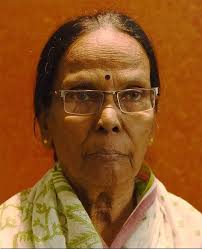
About
Shyamamani Pattnaik is widely regarded as one of the towering figures of Odissi music—the classical vocal tradition that undergirds Odissi dance. Emerging in mid-20th-century Odisha, she became a defining concert and recording voice for the Odissi repertoire of chhanda, champu, bhajan, and particularly the lyrical interpretations of Jayadeva’s Gita Govinda that dancers and connoisseurs hold central to the Odissi aesthetic. Born into a culturally inclined Odia family in Banki, Cuttack district, Odisha, she grew up in an environment where temple music, radio broadcasts, and local sabhas shaped her early ear. Family elders and local music teachers recognized her innate pitch stability, text clarity, and abhinaya-sensibility—the ability to color a line with nuanced emotion—even before formal training commenced.
Her initiation into classical study was through the Odissi vocal lineages that coalesced in Cuttack–Puri–Bhubaneswar. The principal formative influence repeatedly cited for her training is the legendary Odissi vocalist and pedagogue Singhari Shyamsundar Kar, from whom she absorbed the idiomatic gait of Odissi ragas and the signature laya architecture of odissi chhanda. She deepened this training with the stalwart composer-singer Balakrushna Dash, whose repertoire and compositional discipline expanded her command of text-based interpretation in Odia. These two senior gurus formed the bedrock of her musical grammar: the precise handling of raga-ragini specific to Odissi (distinct from Hindustani equivalents), the asymmetrical yet lilting rhythmic designs of the tradition, and a diction-forward delivery that serves dancer and listener alike. In later years, she interacted with and learned from other senior tradition-bearers through All India Radio (AIR) and institutional platforms, refining stagecraft and studio technique for broadcast and long-form performance.
Her concert career took shape alongside the post-Independence revival and codification of Odissi as a classical genre. As Odissi dance surged onto national and international stages, Pattnaik’s voice became a favored soundscape for recitals and festivals. She was frequently featured on AIR (Cuttack) and Doordarshan, contributing benchmark recordings of Gita Govinda ashtapadis and canonical Odia compositions. Colleagues and critics praised her ability to project the sthayi bhava of a piece with restraint and clarity—never oversinging, always anchoring the sahitya. Many landmark Odissi productions drew on her singing, and she collaborated with leading dance gurus’ ensembles, where her command of tempo architecture and sam resolution enabled dancers to risk greater dramatic nuance. While her path was principally concert and pedagogy (as distinct from a primarily film or popular-music route), she also recorded archival sessions that remain reference points for students parsing pronunciation, gamaka ornamentation, and raga delineation in Odissi music.
Parallel to performance, Pattnaik built a consequential teaching career in Odisha’s premier institutions. She served for decades in Odissi vocal pedagogy in Bhubaneswar, associated especially with Utkal Sangeet Mahavidyalaya and later with ensembles and study circles linked to the Odissi Research Centre. Her classrooms—and her home, in the manner of the guru–shishya parampara—became hubs for training singers who would accompany dance, lead concert platforms, and later teach in universities and academies. Her methodology balanced parampara fidelity with practical musicianship: slow, text-led unpacking of a piece; careful attention to tala-jati choices; insistence on clear Odia diction; and an emphasis on how vocal color supports abhinaya on stage. Students recall rigorous riyaaz schedules, micro-corrections to vowel length and consonant landing, and iterative rehearsal of sangatis to achieve both musical beauty and dance-readiness.
Across a long career, she contributed to shaping the modern Odissi concert format: beginning with invocatory pieces (mangalacharan), moving through pure-music items (raga-based elaborations within Odissi idiom), culminating in abhinaya items rooted in Gita Govinda, Odia bhajana, or champu. She actively mentored accompanists and young composers, curated thematic concerts, and advised on repertoire selection for major dance festivals in Odisha and beyond. Her personal bearing—measured, exacting, and deeply maternal—earned her the affectionate honorific “Guruma” among generations of Odissi practitioners. Even in later years, she maintained a practice schedule, mentored advanced students for recordings, and participated in seminars that clarified distinctions between Odissi raga usage and Hindustani thaat-based approaches, warning against homogenization.
In her later life, Pattnaik remained an authoritative presence at examinations, juries, and repertory rehearsals. She gave lecture-demonstrations comparing renderings of the same ashtapadi across different gharanas of Odissi practice, and spoke about text-critical issues in Odia poetics for singers. Though she reduced travel over time, she continued to anchor commemorative festivals and institutional anniversaries in Bhubaneswar and Cuttack. Her legacy today lives most palpably in the voices of her disciples and in widely circulated recordings on AIR archives and Doordarshan retrospectives, which are still used by students to calibrate intonation, sahitya bhava, and tala poise in Odissi music.
Legacy & impact
Shyamamani Pattnaik’s lasting impact is inseparable from the sound and pedagogy of contemporary Odissi music. At a historical moment when the dance was expanding rapidly beyond Odisha, her voice offered a reference grammar—clear diction, raga integrity unique to Odissi practice, and a dancer-aware sense of laya—that helped standardize how Odissi sahitya should be sung on stage and in studios. This “reference sound” has been internalized by accompanists, repertory companies, and soloists across India and in diaspora communities, anchoring stylistic continuity even as new choreography and production values evolve.
Her chief innovation was not novelty for its own sake but the curatorial rigor with which she transmitted repertoire: carefully chosen versions of Gita Govinda ashtapadis, champus by Kavisurya and other poets, and Odia bhajans arranged to sustain abhinaya arcs. She advocated for Odissi-specific raga choices (for example, cautioning against substituting Hindustani analogues) and for the precise treatment of layakari typical of chhanda forms. By modeling a text-centered pedagogy that trains singers to serve dance, she reinforced the interdependence of Odissi music and Odissi dance, a foundational principle of the tradition’s classical status.
Institutionally, her decades of teaching ensured that Odissi vocal did not become a bottleneck for the booming dance ecosystem: she produced accompanists and solo vocalists who could meet the high demands of repertory work, national festivals, and broadcast recordings. Many of her students now lead departments, adjudicate examinations, and run their own gurukuls, multiplying her influence. Archival recordings associated with her name are still consulted for pronunciation and raga-lakshana, and her lecture-demonstrations are cited in seminars at the Odissi Research Centre and universities. In public memory, she remains “Guruma,” a symbol of uncompromising musicality aligned to dance, and a guardian of Odissi music’s distinct identity against homogenizing currents in pan-Indian classical practice.
Timeline
- 1938BirthBorn in Odisha into a culturally inclined Odia family in Banki, Cuttack district, Odisha.
- 1950Formal initiation in Odissi vocalBegan receiving formal classical music training under gurus including Pandit Singhari Shyamsundar Kar and Pandit Balakrushna Dash, with support from her father and uncle, Kalicharan Pattnaik.
- 1960AIR broadcasts beginStarted regular broadcasts from All India Radio, Cuttack/Bhubaneswar, building a public profile.
- 1960Further TrainingMoved to Mumbai to pursue a course in voice culture under B.R. Deodhar and learned nuances of Thumri from Nirmala Devi and Pandit Lakhmi Shankar.
- 1965Major festival appearancesFeatured vocalist for Odissi dance recitals and state cultural festivals.
- 1972Institutional teaching beginsJoined Odissi vocal faculty in Bhubaneswar (Utkal Sangeet Mahavidyalaya).
- 1978Doordarshan telecastsAppeared in national broadcaster telecasts presenting Odissi repertoire.
- 1985Senior guru responsibilitiesAssumed mentorship of advanced students and repertory coaching for productions.
- 1992AIR senior-grade recognitionRecognized as senior/top-grade artist for Odissi music broadcasts.
- 1998Seminars and lec-demsPresented lecture-demonstrations on Gita Govinda interpretation and Odissi ragas.
- 2005Generational impact consolidatesStudents begin to establish themselves as concert vocalists and teachers.
- 2012State and national felicitationsReceived major state/national recognitions for lifetime contribution to Odissi music.
- 2018DocumentaryA documentary film titled "Shyamamani Devi - Odissi Classical Vocalist" was directed by Santosh Gaur, chronicling her life and work.
- 2023Archival recognitionRetrospective features on AIR/Doordarshan and at Odissi festivals highlight her recordings and pedagogy.