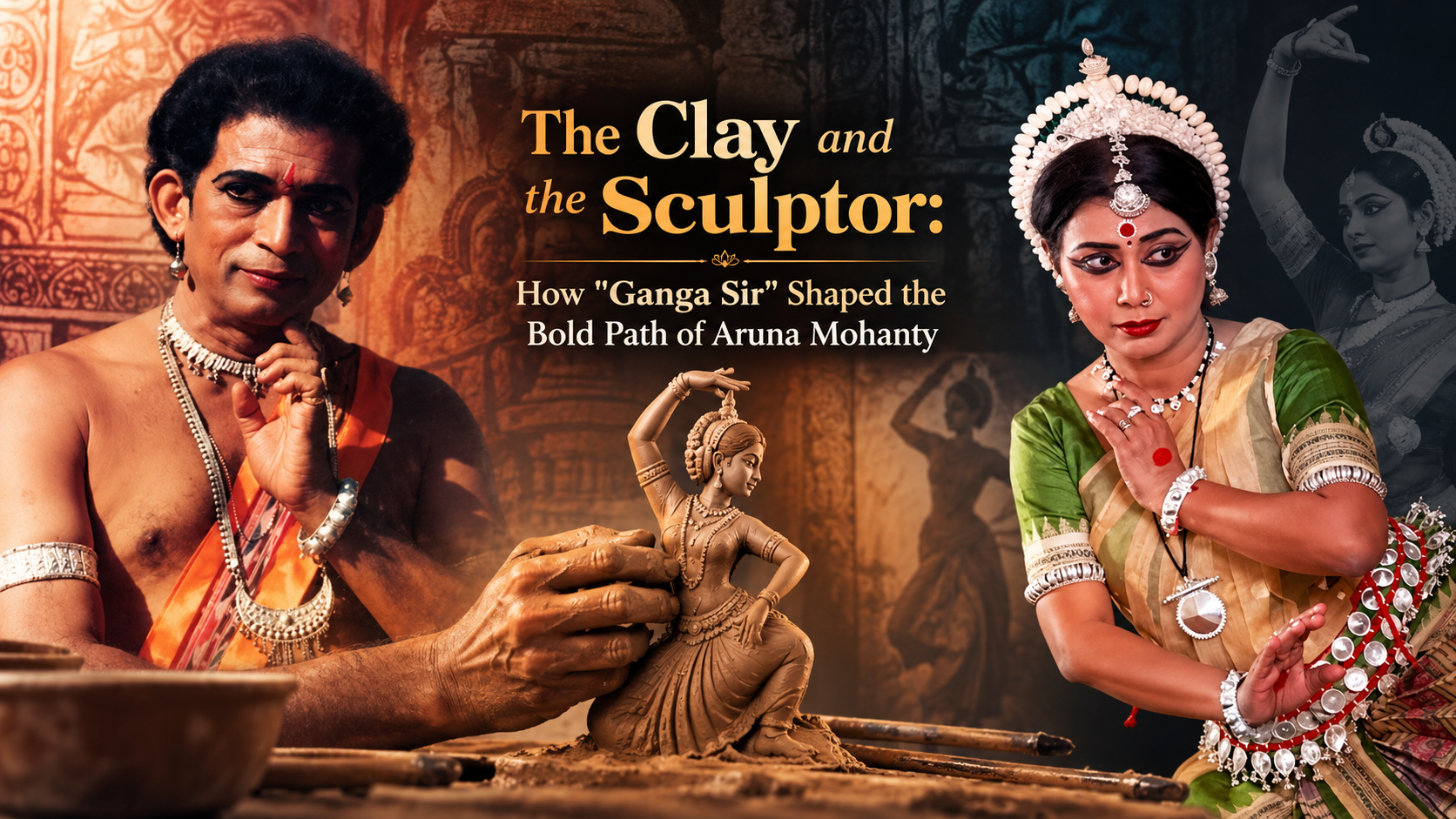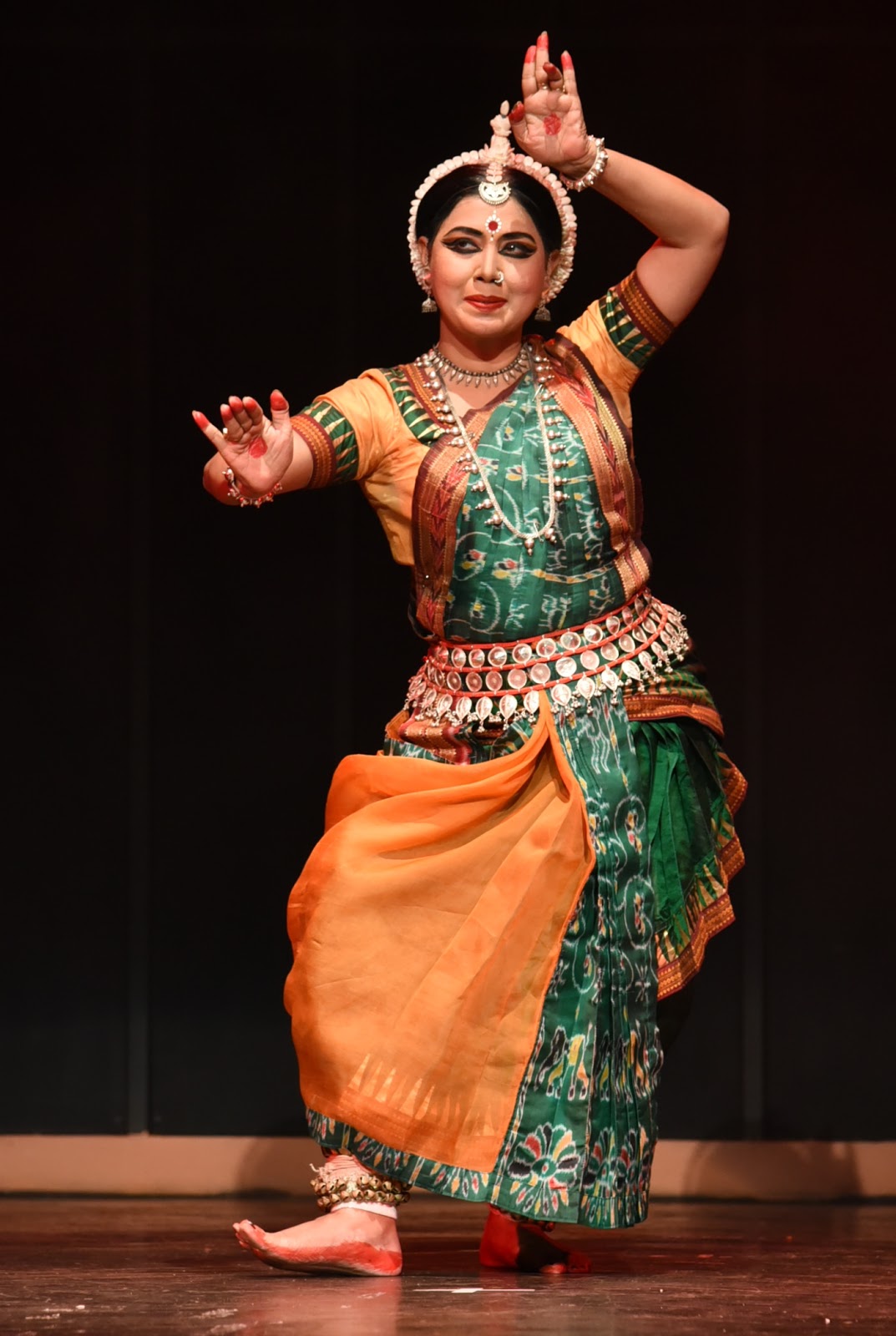
Aruna Mohanty
Odissi Guru
Guru, Odissi exponent, choreographer, Artistic Director/Head, Orissa Dance Academy (Bhubaneswar)
Padma Shri Aruna Mohanty is one of the foremost exponents, teachers, and choreographers of Odissi today, closely identified with the Orissa Dance Academy (ODA) in Bhubaneswar, where she has served for decades as princ…
About
Padma Shri Aruna Mohanty is one of the foremost exponents, teachers, and choreographers of Odissi today, closely identified with the Orissa Dance Academy (ODA) in Bhubaneswar, where she has served for decades as principal dancer, repertory leader, and later as Artistic Director and administrative head. Born in Raghurajpur, Odisha around 1960, she was introduced to dance at an early age through community cultural programs and school performances, and very soon gravitated to formal Odissi training as the classical form resurged in post-Independence Odisha. From her teens she came under the tutelage of the visionary Padma Shri Gangadhar Pradhan, the founder of Orissa Dance Academy, whose rigorous pedagogy and deep anchoring in the Deba Prasad parampara left a lifelong imprint on her technique, stagecraft, and ensemble sensibility.
At ODA, her training was intense and multi-pronged. Guru Gangadhar Pradhan meticulously grounded her in nritta (pure dance), pallavi structures, and complex tala patterns integral to the Deba Prasad school, while simultaneously inculcating an expansive view of choreography suited for the proscenium, temple precincts, and open-air festivals. To deepen her abhinaya and refine stylistic detailing, Aruna also received advanced coaching from Padma Vibhushan Kelucharan Mohapatra through workshops, residencies, and periodic mentorship in Bhubaneswar; this cross-pollination enriched her idiom with Kelubabu’s crystalline lines and nuanced expressivity while retaining the earthiness and dramatic vigor of her core lineage. She further polished expressive subtleties with Padma Shri Kumkum Mohanty, and interacted with senior gurus of the field and allied arts, including percussion masters such as Dhaneswar Swain and music directors like Prof. Ramhari Das, whose compositions she frequently employed in her productions.
Her stage career took shape in the late 1970s and early 1980s as she emerged as a striking soloist and a central figure in ODA’s repertory. A significant early milestone was her rangapravesha under Guru Gangadhar Pradhan, followed by acclaim at Odisha’s major platforms—Konark Dance Festival, Mukteswar Festival, and Rabindra Mandap series—and then at national sabhas including Khajuraho, Ellora, and Dover Lane. Through the 1990s she consolidated her reputation as both soloist and choreographer, crafting group works that blended rigorous classical grammar with thematic heft drawn from Odisha’s history, literature, and living social concerns. Notable among these were productions inspired by the Mauryan-Kalinga interface and Emperor Kharavela’s reign, works on the Buddhist heritage of Dhauli and Ratnagiri, and narrativizations of Konark’s architectural metaphors. She became known for situating Odissi’s sculpturesque kinetics within well-researched dramaturgies, interweaving Sanskrit and Odia textual sources, and commissioning original music—often in raga-tala frameworks that foregrounded Odissi’s distinctive melodic and rhythmic contours.
A cornerstone of her professional life is pedagogy. At Orissa Dance Academy she mentored multiple generations of dancers, codifying class structures that balance core repertoire (mangalacharan, batu nrutya, pallavi, abhinaya, moksha) with conditioning, tala-vadya orientation, and interpretive practice rooted in sahitya. She emphasizes the indivisibility of nritta and abhinaya—the sculptural line must breathe with emotive intent; abhinaya must sit on impeccable rhythm, sthana, and bhramari. Her teaching stresses textual literacy (from Gita Govinda to Odia bhajans and modern poetry), movement ecology (economy of gesture, drishti-bheda, and breath-led phrasing), and stagecraft (group spacing, entrances, lighting cues), preparing students to perform both as compelling soloists and as ensemble artists. Following the demise of Padma Shri Gangadhar Pradhan in 2010, Aruna shouldered major institutional responsibilities at ODA—curating seasons, steering the repertory, and preserving her guru’s choreography while creating new work suited to contemporary audiences.
As a choreographer, Aruna Mohanty is noted for theme-based productions that speak to Odisha’s civilizational memory and present-day ethical questions. She has created evening-length works on Kharavela (statecraft and cultural pluralism), Dhauli-Buddha (non-violence and transformation), and womanhood (honoring the Mahari heritage and exploring the Shakti concept), besides abstract pallavis that stretch kinetic possibilities within Odissi’s grammar. She frequently collaborates with scholars for dramaturgy, and with Odissi music composers to ensure sahitya and swara-raga choices complement the narrative arc. Her direction of large-format dance-dramas for state festivals and international tours has contributed to the visibility of Odissi as a sophisticated narrative form, not merely a suite of items.
Beyond performance and choreography, Aruna’s contributions encompass curation, documentation, and advocacy. With ODA and the Department of Culture, Government of Odisha, she has been associated with the Dhauli-Kalinga Mahotsav and other flagship festivals, programming line-ups that juxtapose Odissi with allied traditions such as Chhau and martial-arts-inspired works, thereby highlighting Odisha’s broader performance ecology. She has documented repertoire, mentored young choreographers through workshops across India and abroad, and served on academic and governmental committees concerning curriculum and artist welfare. Empanelled with ICCR and graded by Doordarshan, she has undertaken extensive tours to the United States, Europe, the Middle East, and Southeast Asia, conducting residencies that seed sustainable Odissi communities outside India.
Personally, Aruna is remembered by students and colleagues as exacting yet nurturing—insistent on tala integrity, stance purity, and internalized sahitya, but equally attentive to dancer wellbeing and long-term artistic growth. In later decades of her career she has balanced performance with institution building, repertory renewal, and the creation of repertory pipelines for youth. She continues to perform selectively, stage new works, mentor senior disciples who now run their own schools, and represent Odissi on national panels—embodying a lifetime’s commitment to her guru-parampara and to the evolving canvas of Odissi.
Legacy & impact
Aruna Mohanty’s lasting legacy lies in her dual identity as a consummate soloist rooted in parampara and a choreographer-curator who broadened Odissi’s thematic horizons without compromising its grammar. She brought a researcher’s rigor to the stage, mining inscriptions, chronicles, and classical/modern poetry to craft dramaturgies around Odisha’s civilizational sites—Dhauli, Khandagiri-Udayagiri, Konark—and personae such as Kharavela. By aligning movement architecture with text and music that are contextually appropriate, she reinforced Odissi’s scholarly credibility while making it accessible to broader audiences at home and abroad.
Pedagogically, her ODA-based methodology—equal parts technique, abhinaya literacy, tala training, and stagecraft—has produced a steady stream of competent soloists and ensemble dancers who populate companies and schools across India, North America, Europe, and Southeast Asia. Many of these disciples are now teachers, passing on not only the core repertoire but also an ethic of research-led performance. Her insistence on sahitya comprehension—students must be able to translate, scan meter, and feel the poetry—has elevated interpretive standards in the Odissi classroom, particularly outside Odisha where textual immersion can be a challenge.
As a curator of festivals such as the Dhauli-Kalinga Mahotsav (in association with the Government of Odisha), she promoted an integrated view of Odisha’s performance traditions, giving space to Odissi, Chhau, and martial idioms, and thereby nurturing dialogue between classical and folk/classical-derived forms. Her productions on women’s subjectivities and social concerns demonstrated that Odissi can address contemporary issues with dignity and classical restraint, avoiding dramaturgical gimmickry while retaining rasadhvani. This has inspired younger choreographers to take on history and social themes in Odissi using grounded technique and thoughtful dramaturgy.
Internationally, her residencies and tours helped establish Odissi pedagogy beyond India, strengthening diaspora schools that now serve as important nodes for the form’s transmission. Within India, her sustained work at ODA after Guru Gangadhar Pradhan’s passing ensured institutional continuity, archiving of repertoire, and an environment where new work could emerge in conversation with tradition.
Today, Aruna is invoked as a model of the scholar-practitioner: a dancer who can hold the stage, write/lecture convincingly about the form, and steward institutions—shaping how Odissi is taught, curated, and presented in the 21st century.
Timeline
- 1960BirthBorn in Raghurajpur, Odisha
- 1972Began formal Odissi trainingStarted rigorous training under Padma Shri Gangadhar Pradhan at Orissa Dance Academy, Bhubaneswar
- 1979RangapraveshaFormal solo debut under Guru Gangadhar Pradhan in Bhubaneswar
- 1984National circuit debutPerformed at major Indian festivals including Konark and Khajuraho, gaining recognition as a promising soloist
- 1990Repertory leadershipEmerged as principal dancer and rehearsal director within ODA’s touring company
- 1995Choreographic voiceBegan presenting original group choreographies at state/national festivals, noted for research-driven themes linked to Odisha’s heritage.
- 2001International toursLed/participated in ICCR tours to North America and Europe; conducted workshops and residencies (early 2000s).
- 2003Thematic productionsPremiered new evening-length works on Kharavela and Dhauli/Buddhist heritage with original music
- 2007Mahari AwardReceived the Mahari Award recognizing excellence in Odissi and contribution from Guru Pankaj Charan Research Foundation
- 2010Institutional leadership at ODATook on expanded artistic/administrative leadership after the passing of Padma Shri Gangadhar Pradhan; curated seasons and preserved his repertoire.
- 2010Sangeet Natak Akademi AwardHonored with India’s national award for Odissi by SNA, New Delhi
- 2014Guru Kelucharan Mohapatra AwardRecognized with the GKCM Award for sustained contributions (approximate year).
- 2015Festival curatorBegan/continued curatorial association with Dhauli-Kalinga Mahotsav and other Odisha state cultural festivals.
- 2017Padma ShriConferred the Padma Shri (Art–Dance, Odissi) by the Government of India
- 2020Mentorship and global teachingExpanded mentorship of senior disciples who established/led schools in India and abroad; continued creating new repertoire.