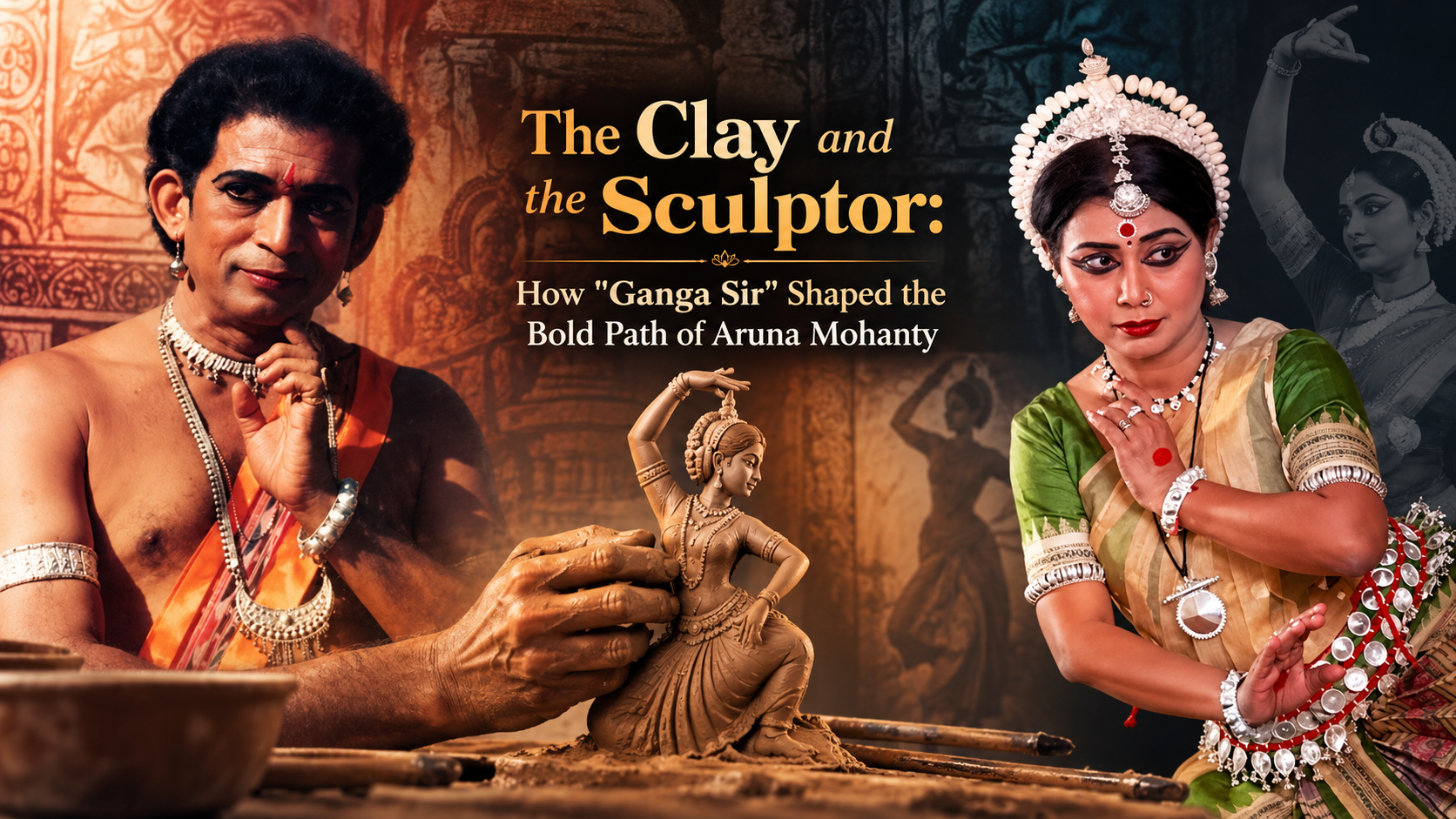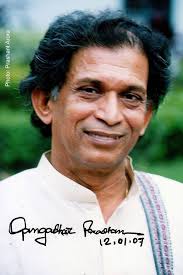
Gangadhar Pradhan
Odissi Guru · 1948–2010
Guru; Founder-Director, Orissa Dance Academy (Bhubaneswar) and Konark Natya Mandap; Odissi exponent, choreographer, festival curator
Padma Shri Gangadhar Pradhan (1948–2010) was one of the most influential architect-gurus of post-Independence Odissi.
About
Padma Shri Gangadhar Pradhan (1948–2010) was one of the most influential architect-gurus of post-Independence Odissi. Born (1948) in the Parikud island region of present-day Puri district, Odisha (confidence: high on region; precise village/day not firmly attested), he grew up amidst temple rituals, akhada traditions, kirtan and an environment where Gotipua and folk-theatrical forms flourished. Like many boys of coastal Odisha, his earliest exposure to dance and music came through village akhadas and devotional ensembles, where rhythm (mardala/pakhāvaj) and movement were inseparable. This immersive milieu laid the foundation for the laya (rhythm) consciousness that later distinguished his choreography and pedagogy.
Pradhan’s formal initiation into Odissi came through the Gotipua tradition before he sought training with the seminal masters who codified modern Odissi in the 1950s–60s. Over time he trained under three pillars of Odissi—Guru Pankaj Charan Das, Guru Deba Prasad Das and Padma Vibhushan Kelucharan Mohapatra—thus absorbing temple, folk-theatrical and classical-abhinaya lineages in rare balance (confidence: high on association with all three; detailed chronology varies across accounts). He also cultivated strong training in percussion (mardala), a skill that would inform his teaching and ensemble-building for decades. Moving to Bhubaneswar as the state capital emerged as an arts hub, he engaged with the first generation of stage Odissi, performing, assisting in productions, and honing a pedagogy that honoured rigor while remaining community-rooted.
In 1975, perceiving the need for a robust training-cum-repertory platform, he founded the Orissa Dance Academy (ODA) in Bhubaneswar. ODA became both a gurukul and a performance institution, offering graded training, staging annual productions, and providing livelihoods to dancers and accompanists. Pradhan’s classroom stressed tala clarity, clean chaukas/tribhangas, kinetic grammar anchored in mardala, and the emotive grammar of abhinaya rooted in Odia sahitya, Jagannath culture and Gita Govinda. He encouraged students to learn music, rhythm and even stagecraft, believing a complete Odissi artiste must understand the ecology of performance. His rehearsals were reputedly exacting yet paternal, cultivating discipline, ensemble sensitivity and a strong work ethic.
In the 1980s he looked seaward to Konark’s Sun Temple, envisioning a space where Odissi could converse with Odisha’s architectural and ritual memory. He established Konark Natya Mandap (1986) as an open-air arts complex, training centre and residency near the temple precincts, and curated the Konark Dance & Music Festival, which grew into a signature winter festival drawing leading classical dancers and musicians from India and abroad. The Mandap also nurtured Gotipua troupes, paika akhada demonstrations and mardala pedagogy, creating a continuum between folk, ritual and the modern proscenium. These institutions—ODA and Konark Natya Mandap—became the twin pillars of his life’s work.
Across the 1970s–2000s, Pradhan performed extensively in India and overseas as dancer, choreographer and ensemble-leader, showcasing Odissi at national festivals, ICCR circuits and state-organised cultural diplomacy tours (specific touring rosters vary by year; confidence: high on sustained national/international touring). His choreographic oeuvre included stand-alone items (mangalacharan, batu nritya, pallavis, abhinaya) and dance-theatre works drawing on Odia epics, Vaishnava lore and regional history. He was committed to using authentic Odia literature and music—Jayadeva, Upendra Bhanja, Odia champu-chhanda—and collaborated closely with mardala and Odissi music stalwarts to keep the soundscape rooted yet vibrant.
As a teacher, he mentored multiple generations, many of whom became celebrated dancers, teachers and festival curators. He prioritised building organizational ecosystems: repertory management, festival curation, archiving, and technical theatre. Under his guidance ODA created a repertory that toured widely and trained accompanists (mardala, violin, flute, vocal), thus strengthening Odissi’s infrastructure. He also advocated for dancer welfare, steady salaries for repertory members, and long-term contracts for accompanists—uncommon commitments in the sector at the time.
In later years, even as health concerns intermittently slowed him, Pradhan continued to steward his institutions and festivals, mentor senior disciples into leadership roles, and consolidate the training pipelines at ODA and Konark. He passed away in Bhubaneswar on 2010-10-10, triggering an outpouring of tributes from Odisha’s cultural community and the wider Indian classical dance world. His passing marked the loss of a builder-guru whose vision extended beyond individual performance to the very ecosystem that sustains an art form.
Legacy & impact
Guru Gangadhar Pradhan’s most enduring legacy lies in institution-building that anchored Odissi’s growth beyond individual star performers. By founding the Orissa Dance Academy (1975) and Konark Natya Mandap (1986), he created durable platforms where teaching, repertory performance, research, and festival curation coexisted. This ensured a pipeline for dancers from foundational training to professional stage exposure, and generated livelihoods for accompanists—mardala players, vocalists and instrumentalists—thereby stabilising Odissi’s support system. His insistence on rhythmic literacy for dancers helped foreground mardala as a living, evolving accompaniment tradition; many Odissi ensembles today reflect that rhythmic clarity and ensemble discipline.
As curator of the Konark Dance & Music Festival, he re-situated Odissi within Odisha’s monumental landscape, using the Sun Temple’s aura to dignify the classical arts on an international stage and stimulate cultural tourism. The festival model he helped shape—state partnership, private institutional leadership, and artist-centred programming—has been emulated by several dance festivals in Odisha and beyond. His programming intentionally juxtaposed Odissi with other classical forms, encouraging dialogue while consolidating Odissi’s identity.
Pedagogically, his holistic method—training in dance, tala, music, literature and stagecraft—produced well-rounded artistes capable of leading institutions and festivals themselves. Several of his disciples now helm schools, curate festivals, and contribute to policy and archiving, extending his organizational ethos. He championed the continuum between Gotipua, paika akhada and classical Odissi, thereby preserving community traditions and giving them renewed visibility. His repertory’s emphasis on Odia sahitya safeguarded linguistic-cultural specificity within a pan-Indian classical circuit.
Recognition today comes through the continued vitality of ODA and Konark Natya Mandap, the sustained popularity of the Konark festival, and tributes at Odisha’s major classical festivals. For younger dancers, his example demonstrates that the health of a classical form depends not only on great choreographies but also on building institutions, caring for accompanists, and creating stages. In that sense, his legacy is infrastructural as much as artistic—a blueprint for how regional cultural leadership can shape national art histories.
Timeline
- 1948BirthBorn in the Parikud region, Puri district, Odisha (exact day-month uncertain).
- 1960Initial trainingIntroduced to movement and rhythm through Gotipua/akhada traditions in coastal Odisha (approx. early 1960s).
- 1965Formal Odissi trainingBegan structured Odissi under leading gurus including Pankaj Charan Das and Deba Prasad Das (approx. mid-1960s).
- 1968Advanced tutelageSought training and guidance from Padma Vibhushan Kelucharan Mohapatra, refining abhinaya and stage craft (late 1960s).
- 1970Performance careerToured within Odisha/India; assisted in repertory productions and ensemble choreography (early 1970s).
- 1975Founded Orissa Dance AcademyEstablished ODA in Bhubaneswar as a training-cum-repertory Institution.
- 1978National circuitsODA repertory increasingly featured at national festivals and state cultural circuits (late 1970s–1980s).
- 1986Konark Natya MandapEstablished Konark Natya Mandap near Sun Temple, creating an open-air campus for training and performance.
- 1986Konark Dance & Music FestivalLaunched/curated the festival at Konark Natya Mandap in collaboration with state cultural agencies.
- 1992Repertory consolidationStandardised training modules and expanded ODA’s repertory under his direction (early–mid 1990s).
- 1998National recognitionReceived Sangeet Natak Akademi Award for Odissi.
- 2003International outreachODA/Konark ensembles continued ICCR/state-supported international tours (early 2000s; representative).
- 2008Padma ShriConferred Padma Shri by the Government of India for contributions to Odissi.
- 2010DemisePassed away on 2010-10-10 in Bhubaneswar; disciples and institutions carry forward his legacy.