About
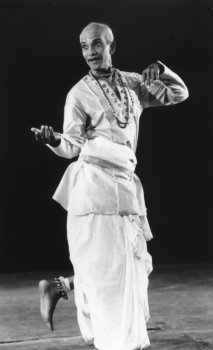
Guru Pankaj Charan Das is revered as the "Adi Guru" (First Guru) and fountainhead of Odissi dance. Born into a Mahari (temple dancer) family in Puri, Odisha, he was uniquely positioned to access the closely guarded knowledge of the sacred temple dance tradition. Despite being orphaned at a young age and facing tremendous economic hardship, his unwavering passion for dance transformed him into a visionary who would reshape the cultural landscape of India.
Pankaj Charan Das was the only guru of his generation born into the Mahari tradition, giving him direct access to the devotional dance forms that had been performed in the Jagannath Temple for centuries. He grew up learning from his foster mother Mahari Chintamani, absorbing the nuances of this sacred art while also being exposed to the Gotipua and Akhada traditions.
His revolutionary contribution came when he dared to take the sacred temple dance out of the sanctum and onto the professional stage. Working in theatre companies in the 1940s, he choreographed pieces that combined the grace of Mahari dance with the vigor of Gotipua and the dramatic elements of theatre. His landmark composition "Bhasmasura" featured his students Kelucharan Mohapatra and Lakshmipriya Devi, marking the first time temple dance was performed publicly for entertainment.
Beyond his artistic genius, Guru Pankaj Charan Das was a social reformer who challenged the stigma attached to dancers and elevated dance to a respected art form worthy of university education. He taught at Utkal Sangeet Mahavidyalaya in Bhubaneswar and mentored the pioneers who would establish Odissi as one of India's eight classical dance forms.
Legacy & impact
Guru Pankaj Charan Das's legacy is unparalleled as the true fountainhead of Odissi dance. He was aptly called the "Adi Guru" - the first guru - because he was the guru to all the founding fathers of modern Odissi: Kelucharan Mohapatra, Deba Prasad Das, and Mayadhar Raut. Without his vision and courage, the sacred temple dance of the Maharis might have been lost forever.
His most significant contribution was not just preserving an ancient art form, but transforming it into something that could thrive in the modern world. He took a dance tradition that was stigmatized and confined to temples, and elevated it to a respected classical art form taught in universities and performed on international stages.
Guru Pankaj Charan Das was also a social revolutionary who challenged the prejudices of his time. By teaching Odissi to girls from elite families and establishing dance as a respectable profession, he fundamentally changed society's attitude toward dancers. His innovative choreography, which seamlessly blended the grace of Mahari dance, the vigor of Gotipua, and the drama of theatre, created the aesthetic foundation upon which all modern Odissi is built.
The Adi Guru Pankaj Charan Das Award festival, established in his honor, continues to celebrate his monumental contributions. His distinctive style, characterized by graceful movements, intricate footwork, and expressive abhinaya, lives on through his students and their disciples, ensuring that his vision for Odissi continues to inspire dancers worldwide.
Timeline
- 1925Born in PuriBorn on March 17 into a Mahari family in Puri, Odisha
- 1931Father Passed AwayOrphaned at age six, faced early economic hardship
- 1937Started PerformingBegan appearing in amateur song and dance presentations
- 1941Joined TheatreStarted working with New Theatres company in Cuttack
- 1944Joined Annapurna TheatreAppointed as actor and dance director at Annapurna "B" theatre company
- 1945Landmark "Bhasmasura" PerformanceChoreographed Bhasmasura with Kelucharan Mohapatra - first public presentation of temple dance
- 1950Pioneering WorkContinued choreographing and teaching, establishing foundation of modern Odissi
- 1960Joined Utkal Sangeet MahavidyalayaAppointed as Senior Faculty Guru, taught generations of dancers
- 1970Created Iconic CompositionsChoreographed masterpieces including Gativilas, Om Namaha Shivaya, and Panchkanyas
- 2003Passed AwayLeft for his heavenly abode on June 11, 2003
- 2014Centenary CelebrationsCentenary celebrations recognized his foundational role in Odissi revival