About
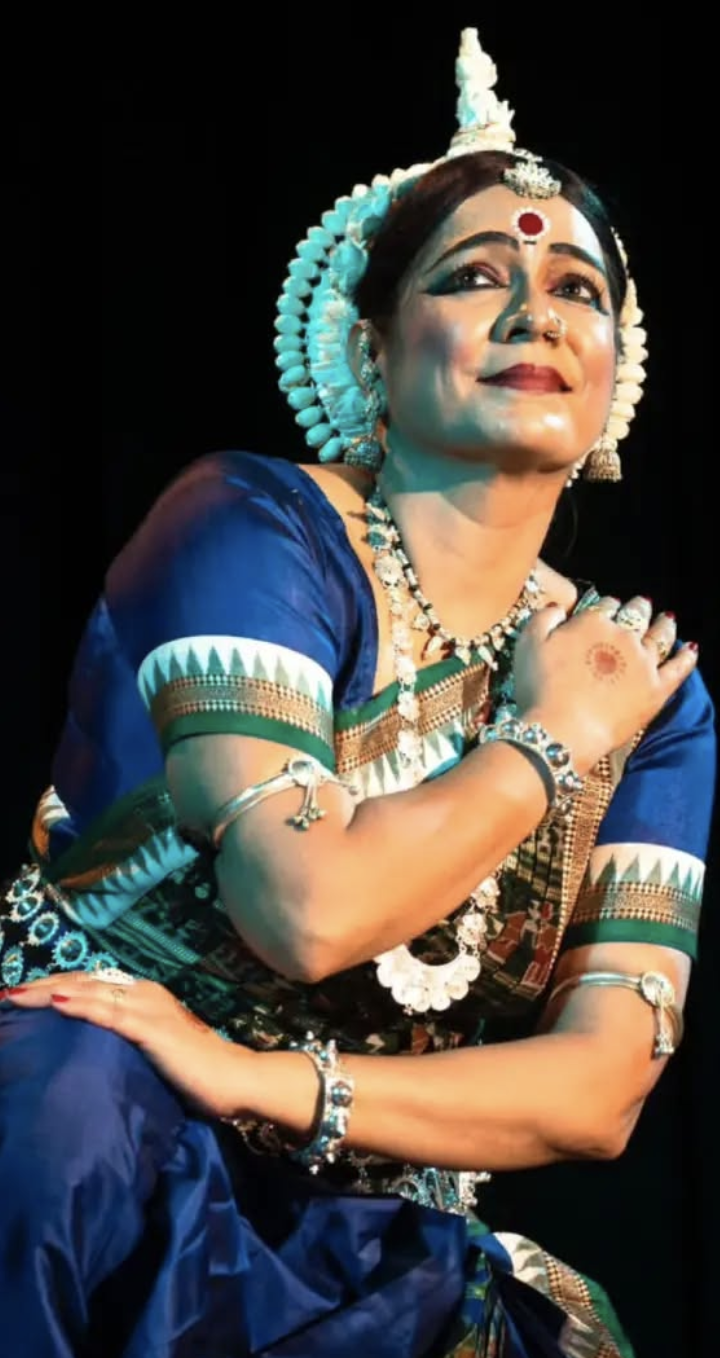
Guru Meera Das is an Odissi dancer, choreographer, repertory leader and institution builder best known as the founder-director of Gunjan Dance Academy in Cuttack, Odisha. Emerging from Odisha’s rich cultural milieu, she was introduced to dance at a young age and gravitated naturally to Odissi, the classical form that is intertwined with Jagannath culture and the performing traditions of coastal Odisha. From her formative years she displayed a keen musicality, an instinctive command over tala, and a strong feel for abhinaya. These early traits, honed through disciplined riyaaz, would later become hallmarks of both her solo dancing and her pedagogy.
Her formal training was anchored in the classic, grammar-rich pedagogy of the Kelucharan Mohapatra school of Odissi. Meera Das trained extensively under Padma Vibhushan Kelucharan Mohapatra, imbibing the aesthetics of clean body line, chiselled chauka and tribhangi, nuanced lasya-tandava balance, and the meticulous approach to nritta-abhinaya integration. She further benefited from guidance and stage grooming associated with the Orissa/Odissi dance institutional ecosystem in Bhubaneswar and Cuttack, including exposure to the repertory discipline and large-format group choreography that grew around the work of Padma Shri Gangadhar Pradhan (guidance/association – uncertain). Alongside dance technique, she engaged deeply with Odissi music and mardala, seeking rhythmic clarity and sahitya sensitivity (mentoring/modules from leading Odissi musicians and mardala gurus – uncertain). The confluence of these streams positioned her solidly within the Odissi mainstream while equipping her to lead ensembles and teach.
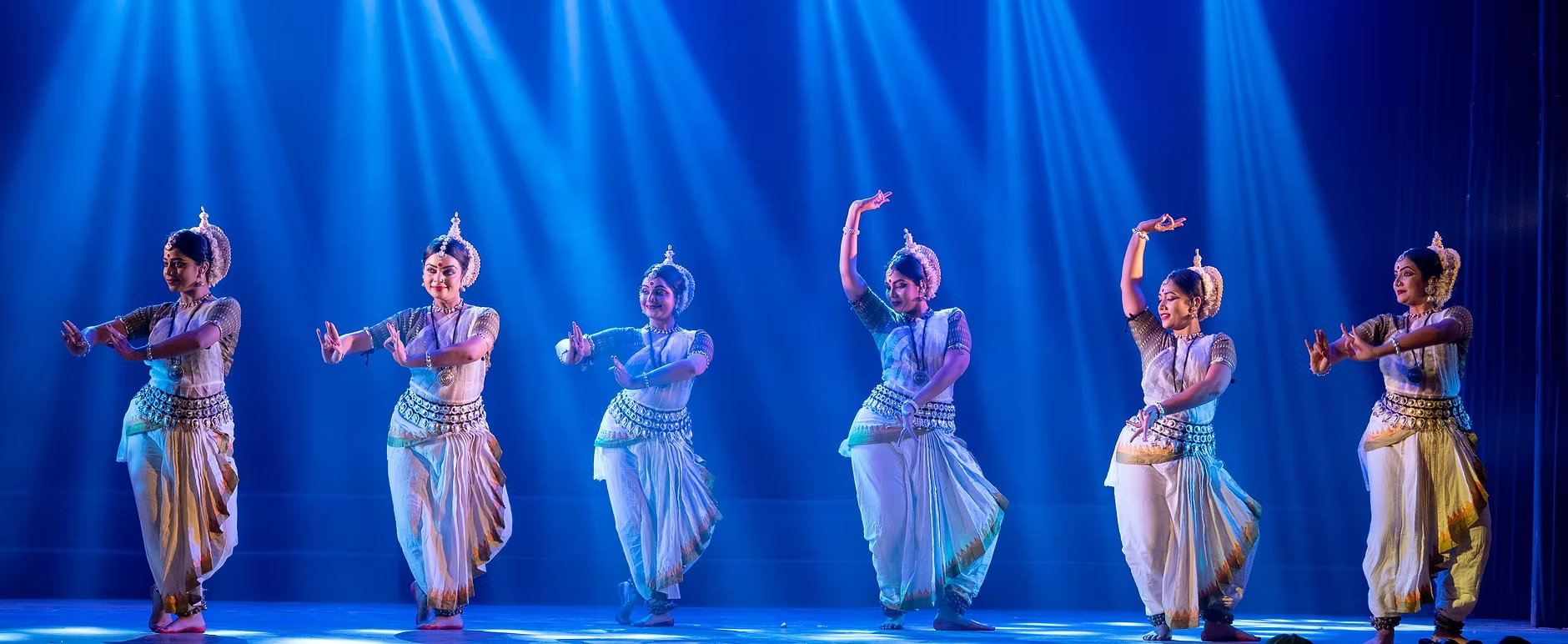
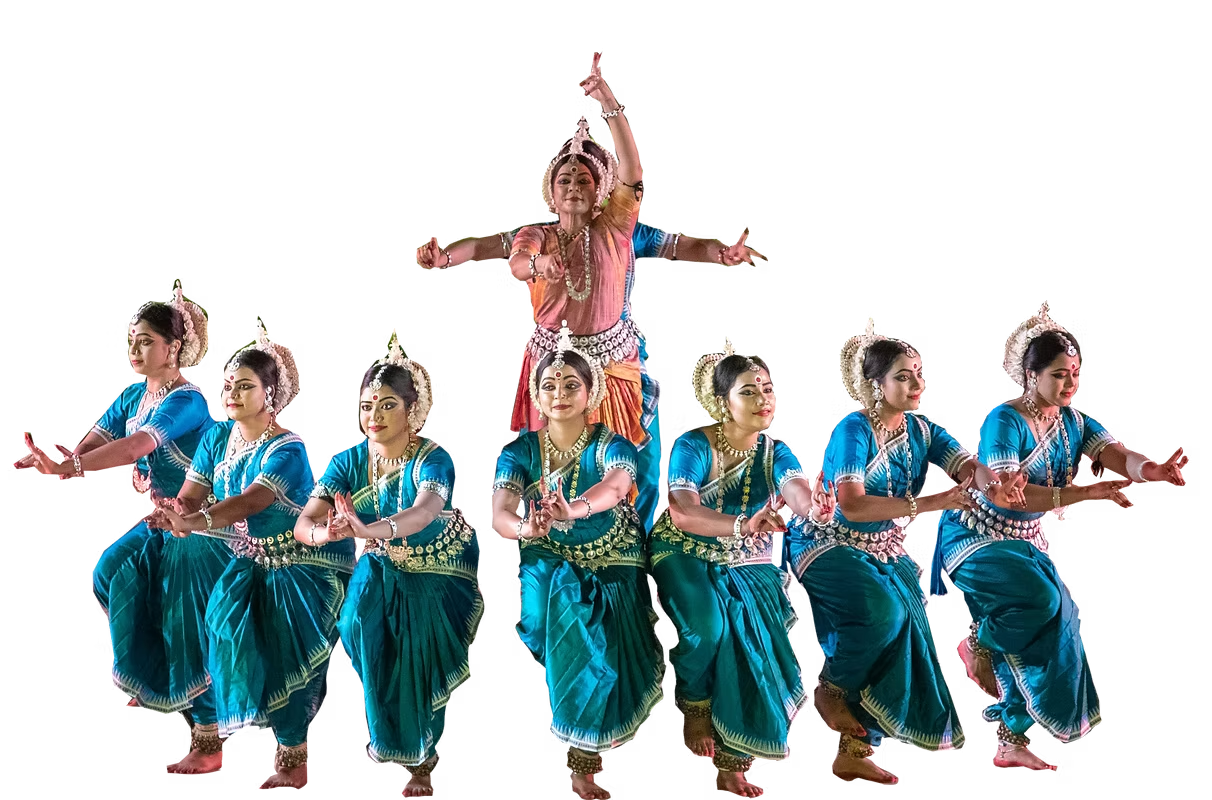
A defining milestone was the founding of Gunjan Dance Academy in Cuttack (year of establishment widely cited in the mid-1990s – 1995/1996, uncertain). Conceived as a rigorous gurukul-style space adapted to a modern city context, Gunjan nurtured students from beginner to advanced levels, developed a repertory, and became a hub for Odissi in the twin cities. Under Meera Das’s direction, the academy institutionalized a curriculum that progresses from foundational sthai-bhaava and chauka-tribhangi conditioning to repertoire items—Mangalacharan, Batu, Pallavi, Abhinaya—and later, thematic choreographies and group works. She emphasized the grammar laid down by her primary guru lineage: clean torso isolations, articulate wrists and neck movements, grounded footwork, and the primacy of lalitya in abhinaya. Class structure typically integrates tala-vadya recitation, ukutas, body conditioning, and sahitya comprehension, with an insistence on stage discipline and ensemble listening.
Parallel to teaching, Meera Das developed a steady performance career, presenting Odissi across India at major festivals and leading tours of the Gunjan repertory abroad (countries frequently reported include parts of Europe and South/Southeast Asia – specific itineraries vary by season; details require citation). On stage, she has been noted for crisp nritta, precise angashuddhi, and restrained yet communicative abhinaya rooted in Odia sahitya and Vaishnava traditions. Her solo margams typically juxtapose the linear clarity of Pallavi with expressive abhinaya to Odia/Braja lyrics, often culminating in Jagannath-centric or Shakta themes depending on the concert context.
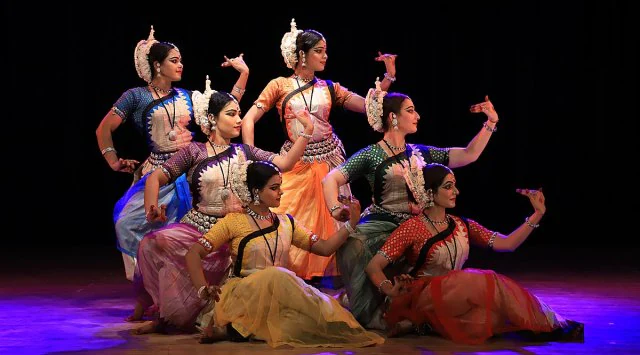
As a choreographer, Meera Das has crafted both solo and ensemble pieces that extend the Odissi repertoire without compromising codified grammar. Her group productions reflect a sensitivity to Odia literary sources, temple ritual motifs, and feminine agency in myth—bringing a contemporary lens to characters like Draupadi or Sita while keeping the movement vocabulary within orthodox Odissi parameters (specific titles and premiere dates vary by season; some works have been revived/re-mounted—details require verification). She has curated and hosted the Gunjan Dance and Music Festival in Cuttack, a platform that has, over decades, presented senior and emerging artists and fostered an audience ecology for classical arts in the region. This curatorial work, combined with institution building, has had an outsized impact on sustaining Odissi beyond the state capital, Bhubaneswar, anchoring Cuttack firmly on the Odissi map.
Her teaching philosophy blends the patience and detail of the classic guru-shishya parampara with an organized syllabus appropriate for contemporary students. She prioritizes riyaaz, tala clarity, and sahitya understanding, urging students to internalize the sthai-bhaava of each item rather than merely reproducing choreography. Rehearsals at Gunjan are reputed for their ensemble discipline, attention to spatial geometry, and musical cohesion, with Meera Das guiding micro-corrections in hastas, drishti-bheda and gati transitions. Over time, her senior disciples have assumed responsibilities as assistant teachers, repertory leads, and independent performers, creating a multiplier effect.
In later years, Meera Das’s focus has consolidated around pedagogy, repertory maintenance, and festival curation, while continuing selective solo and duet performances. She has served on juries/selection panels and has interacted with cultural bodies for empanelment and scholarships for her students (specific appointments/dates require citation). She remains active in Cuttack, nurturing successive batches of dancers and mounting annual or biennial productions that keep the academy’s repertoire fresh while preserving foundational items. Throughout, she has remained rooted to the Odia cultural ethos that first shaped her artistry.
Legacy & impact
Guru Meera Das’s most enduring legacy is the consolidation of a high-quality Odissi training and performance ecosystem in Cuttack through Gunjan Dance Academy and its repertory. In an Odissi landscape often concentrated in Bhubaneswar, she created a parallel nucleus that nurtures dancers from first principles to stage-ready professionalism. This regional rebalancing has had practical consequences: students who might otherwise migrate for rigorous training have found in Gunjan a home that is both exacting and artistically vibrant, thereby widening access and strengthening Odissi’s base in Odisha’s historic cultural capital.
Artistically, she has upheld and transmitted the Kelucharan Mohapatra grammar with clarity, stressing angashuddhi, tala integrity and sahitya sensitivity. Her pedagogical insistence on ensemble discipline and musical listening has produced repertory dancers capable of working across group formats without sacrificing individual artistry. Choreographically, her contributions lie less in radical vocabulary innovation and more in curatorial and dramaturgical choices: selecting Odia literary sources, foregrounding Jagannath-centric and feminine-narrative themes, and arranging traditional items within thematic evenings that speak to contemporary audiences. This approach safeguards Odissi’s core while refreshing its presentation logic.
Institutionally, by running an annual festival and inviting senior and emerging artists, she has fostered intergenerational dialogue and audience development. Her students’ consistent appearances at state and national platforms, scholarship selections, and broadcasting/empanelment achievements testify to the caliber of training. Beyond the academy, her outreach in schools and community spaces has introduced younger audiences to Odissi’s aesthetic values, expanding the art’s social footprint in Cuttack and beyond.
Today, Meera Das is remembered foremost as a builder—of dancers, of repertory, of platforms—and as a steadfast practitioner who chose depth over hyper-visibility. In the cumulative ledger of Odissi, such institution builders ensure the continuity of parampara, the retention of stylistic nuance, and the availability of rigorous training outside a single city center. Her influence, thus, is measured not only in personal performances and productions but in the durable cultural infrastructure she has helped to shape.
Presented by their schools

Festivals
Timeline
- 0BirthBorn in Odisha (likely Cuttack/Bhubaneswar region—exact date/place requires verification).
- 0Initiation into danceIntroduced to Odissi in childhood; began structured lessons with local teachers before advanced training (dates require verification).
- 0Advanced trainingCame under the tutelage of Padma Vibhushan Kelucharan Mohapatra; absorbed the Kelucharan school’s technique and repertoire (dates require verification).
- 0Continuing workOngoing teaching, choreography, and curation in Cuttack; lives and works in Odisha (as of latest).
- 1990Early solo recitalsPresented early solos on Odisha circuits; noted for grammar-rich technique (approximate).
- 1995Founded Gunjan Dance AcademyEstablished Gunjan Dance Academy in Cuttack to formalize training and create a repertory (year widely cited mid-1990s; 1995 used here with caution).
- 1996Gunjan Dance and Music FestivalBegan curating an annual festival in Cuttack presenting senior and emerging artists (approximate).
- 1998First full-evening group productionMounted a thematic ensemble production with Gunjan repertory (title/year require verification).
- 2002International toursLed/participated in international tours with Gunjan; presented Odissi in South/Southeast Asian venues (approximate).
- 2005National empanelmentsSecured national-level grading/empanelment for performances (ICCR/Doordarshan—details require verification).
- 2010Women-centered choreographyPremiered thematic works highlighting feminine narratives within classical frameworks (approximate).
- 2015Institutional milestoneMarked two decades of Gunjan’s continuous training and festival activity (approximate).
- 2018Mentorship transitionSenior disciples assumed assistant teaching and rehearsal direction roles (approximate).
- 2020Digital/Hybrid presentationsAdapted academy and festival programming to digital formats during the pandemic period.
- 2022Repertory relaunchReturned to full-scale stage presentations and touring (approximate).
Schools
Gunjan Dance Academy
founder
TeachesStories & features
All stories →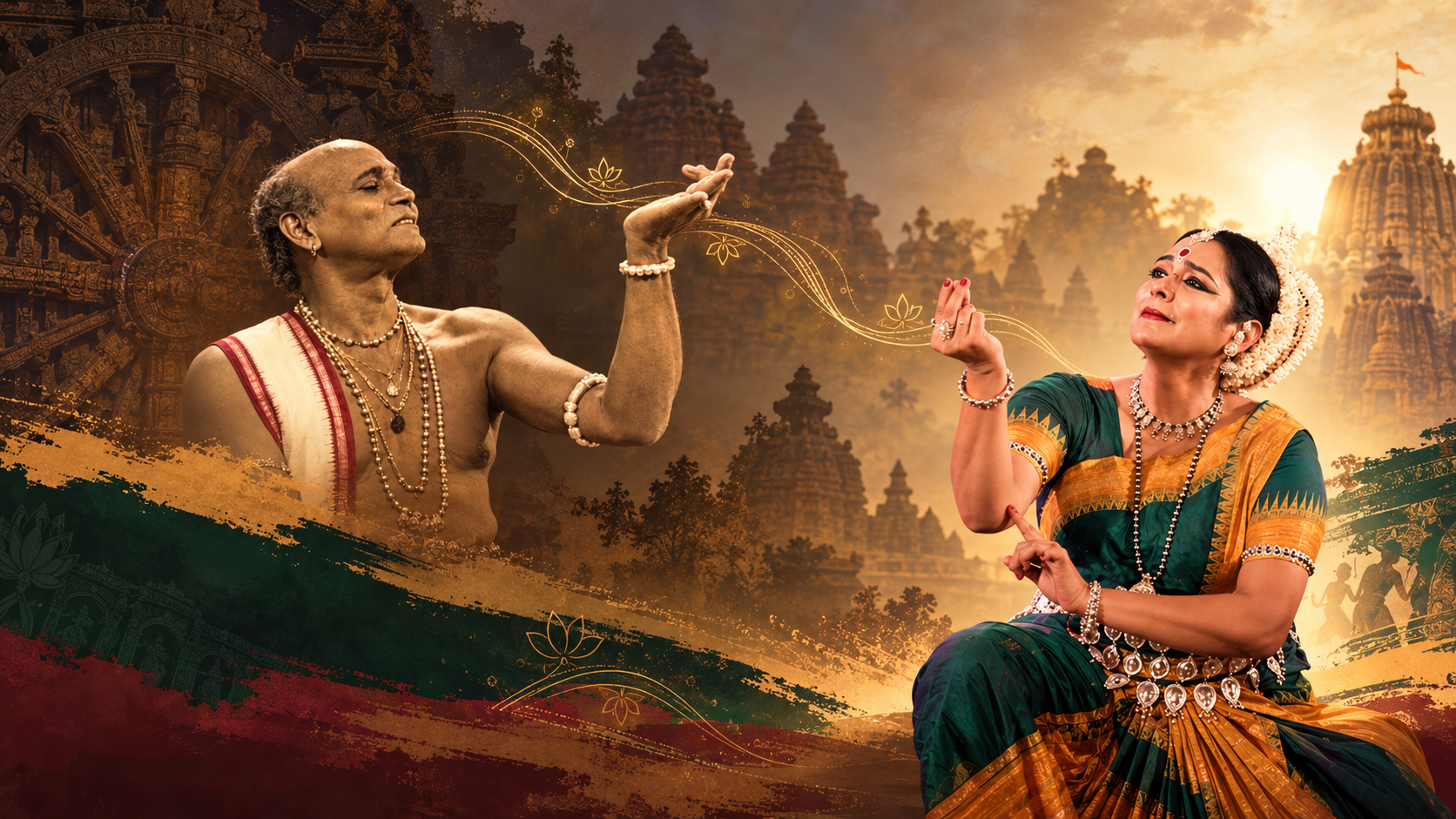
Spotlight · Odissi
The Master’s Stamp
How Meera Das Earned the Ultimate Validation from Guru Kelucharan Mohapatra
In the demanding world of classical Odissi, praise from a legendary master is rarely given. Discover the defining night when a young dancer's vulnerability met the uncompromising eye of Guru Kelucharan Mohapatra.
Taalika Editorial · 3 min
Spotlight · Odissi
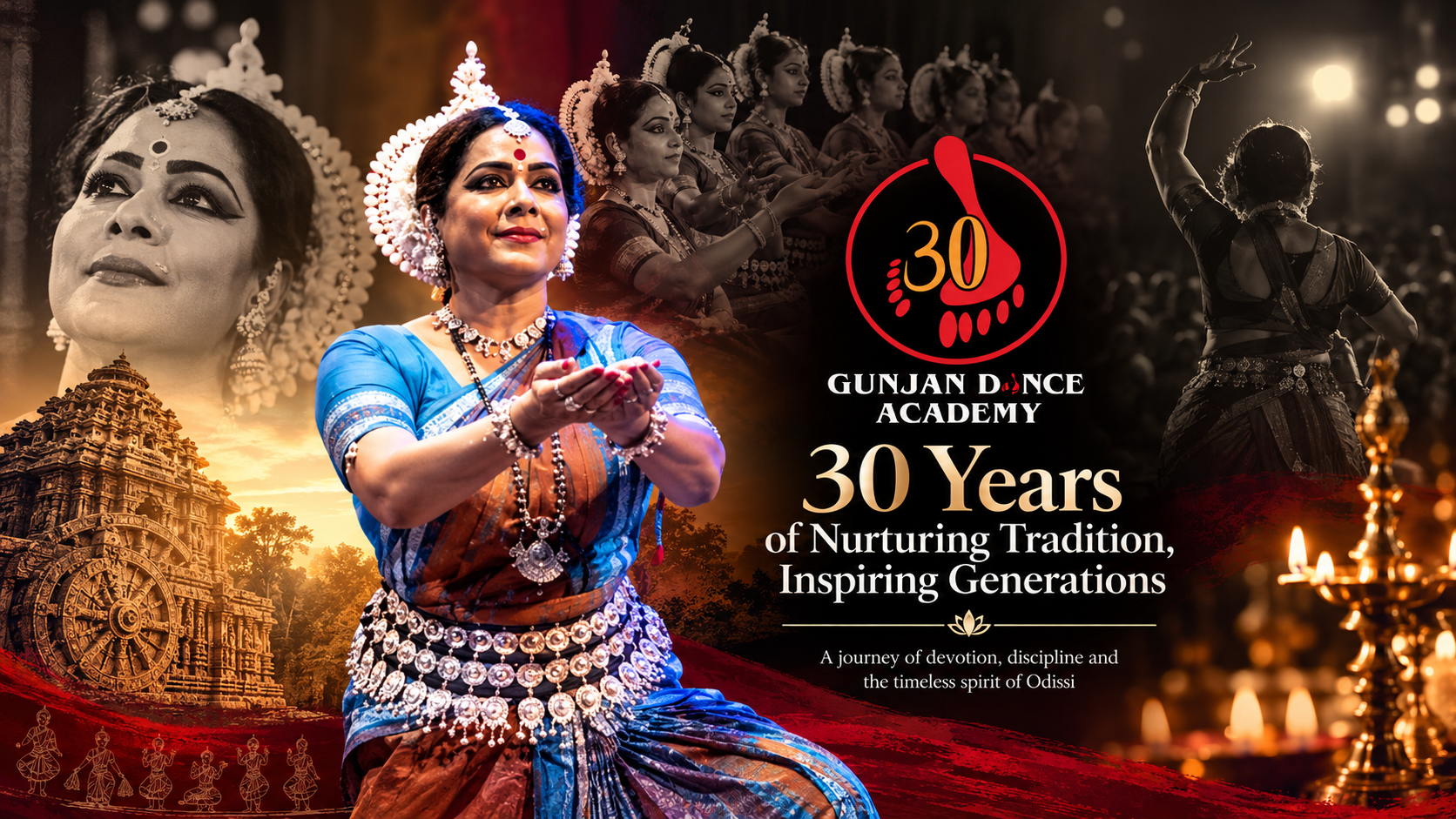
A Murmur That Lasts 30 Years
Inside Gunjan’s Thirty-Year Odissi Pilgrimage
From a quiet impulse in Cuttack to an international classical sanctuary, Guru Meera Das spent three decades proving that uncompromising training, deep repertoire, and quiet conviction outlive every trend.
Taalika Editorial · 5 min