Legacy · Odissi
The Keepers of the Sanctum
How the Last Maharis Breathed Odissi onto the Modern Stage
When colonial laws and social stigma threatened to extinguish the sacred temple dances of Puri, a fiercely guarded matrilineal tradition passed its lyrical soul to a new generation—ensuring Odissi survived the transition from sanctum to spotlight.
Taalika Editorial · Friday, 6 November · 3 min read
Every classical art form hides a secret mother.
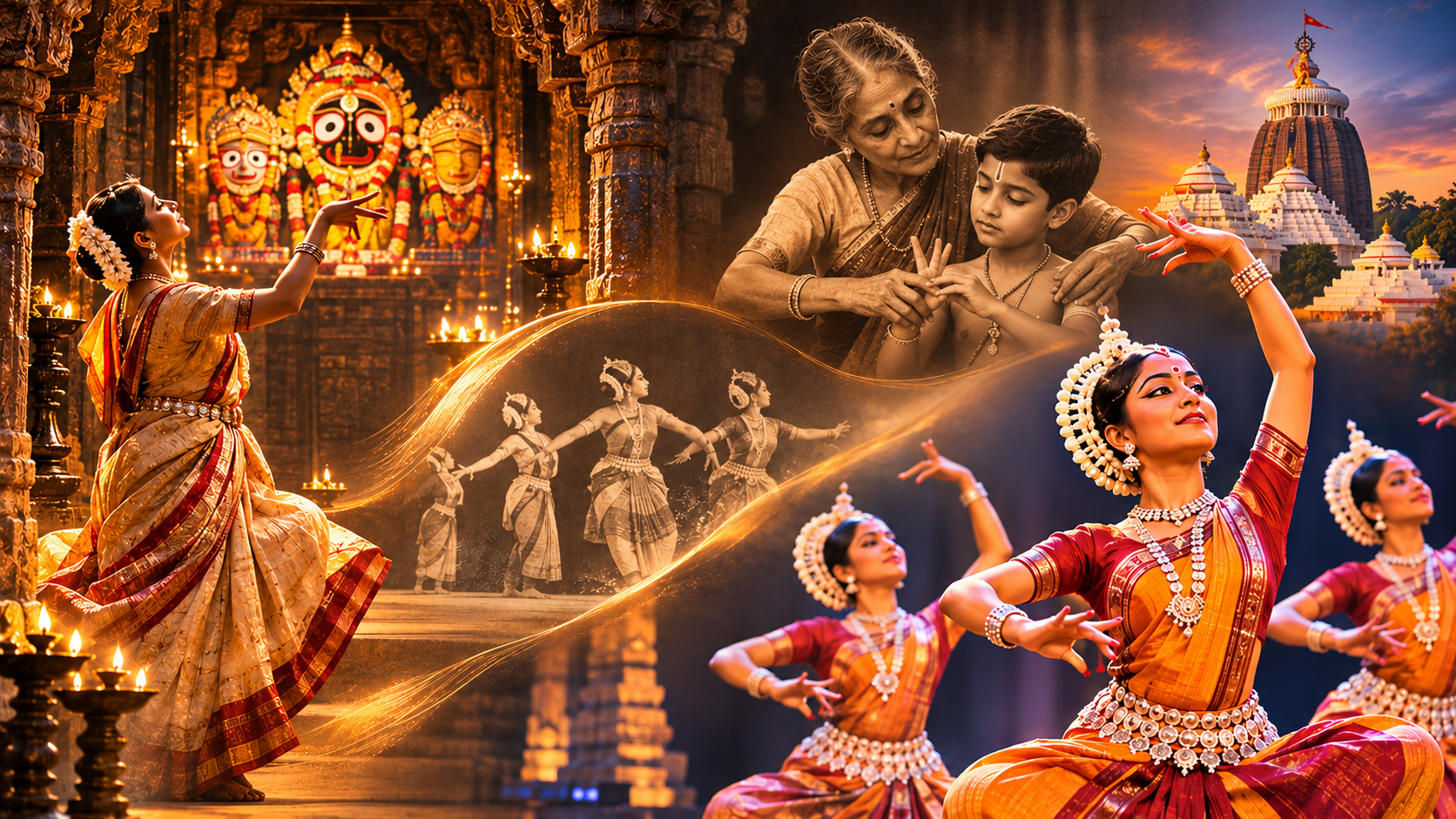
For Odissi, that mother was the Mahari. For centuries, the Devadasis of the Jagannath Temple in Puri were the exclusive custodians of the region's sacred dance. They were women married to the divine, performing highly ritualized, fiercely internal choreographies behind closed temple doors. While the young Gotipua boys performed athletic, acrobatic routines in the public squares, the Maharis held the true, lyrical soul of the dance—the subtle bhava (emotion) and the unhurried grace of devotion.
But by the mid-20th century, the temple doors were closing.
Crushed by colonial-era anti-nautch laws, the loss of royal patronage, and a shifting social morality that cruelly recast their sacred devotion as a stigma, the Mahari tradition was on the brink of total erasure.
The pioneers of the Odissi revival faced a terrifying, existential doubt: If the temple rituals are banned and the women are silenced, does the soul of Odissi die with them? How do you take a fiercely guarded, secretive ritual and hand it to the modern world without destroying its sanctity?
The Silent Inheritance
The Maharis did not let their art die in the dark. They quietly passed the flame to the children raised in the shadows of the temple walls.
The transition from temple ritual to proscenium art did not happen in a bureaucratic office; it happened in the humble courtyards of Puri. The last generation of practicing Maharis—luminaries like Haripriya, Parashmani, Kokilaprabha, and Shashimani (who would live until 2015 as the last of her kind)—held onto the ancient Gita Govinda melodies and the precise, undulating torso movements that defined pure Odissi.
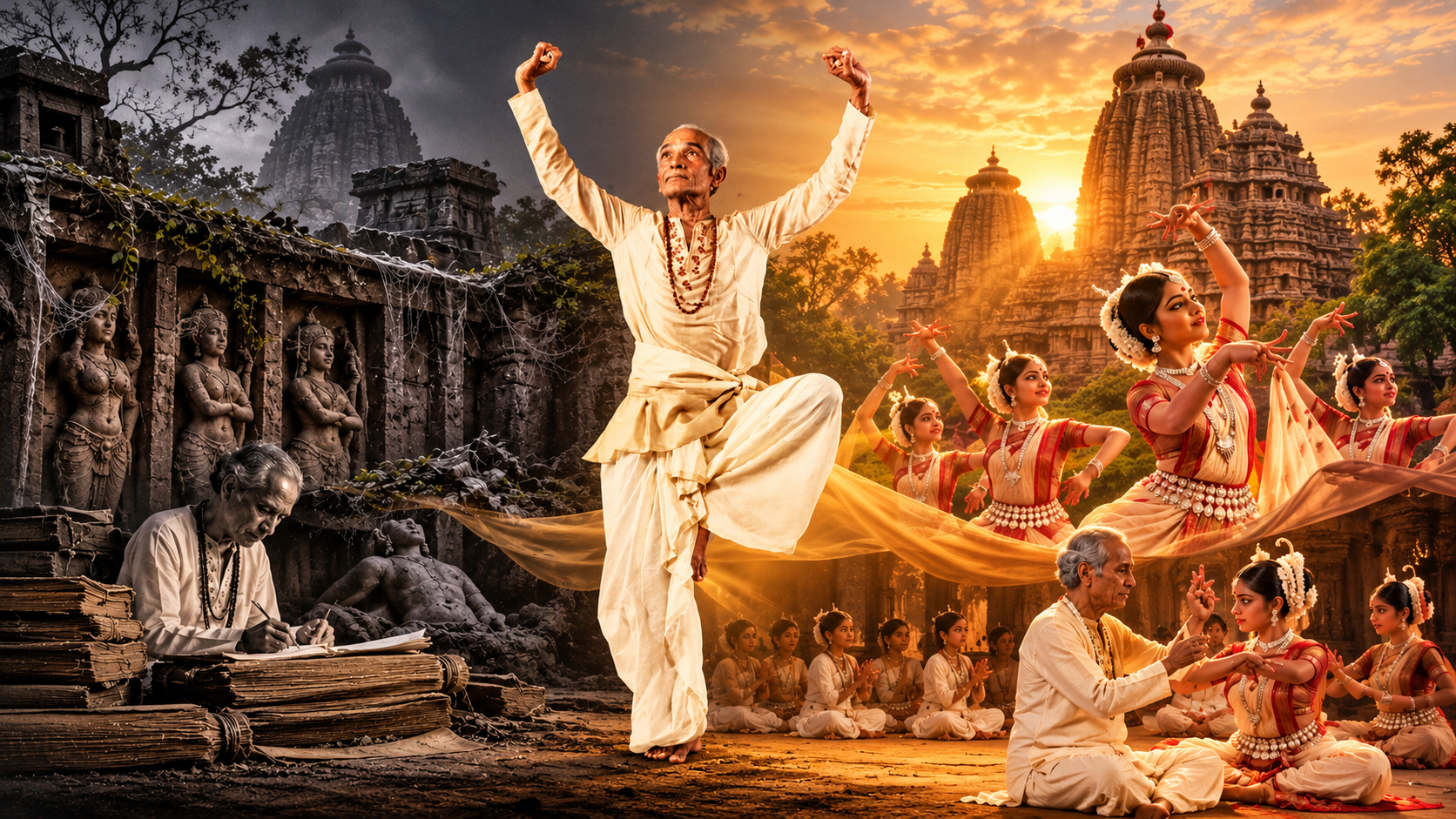
Because they were barred from public stages, they poured their knowledge into their heirs.
The most pivotal of these heirs was a young boy named Pankaj Charan Das. Adopted by Ratnaprabha Devi, a revered Mahari, he grew up immersed in the matrilineal pulse of the temple. He didn't just learn the physical steps; he absorbed the domestic, spiritual atmosphere of the Mahari household. He watched how they walked, how they expressed silent agony, and how they surrendered entirely to Lord Jagannath.
Escaping the Inner Sanctum
Pankaj Charan Das realized that to save his mother’s art, he had to take it out of the temple.
The Mahari style was deeply internal—meant for the eyes of the deity, not the distant gaze of a ticketed audience. Pankaj Charan took the liquid grace of his adoptive mother and scaled it up for the theatrical stage. He stripped away the social stigma but retained the sacred architecture.
When he choreographed modern epics like the Panchakanya, he infused the female characters with the formidable dignity and emotional depth of the temple women who raised him. He became the "Adi Guru" of Odissi, passing this translated Mahari grace directly to his own legendary disciples: Guru Kelucharan Mohapatra, Guru Deba Prasad Das, and Guru Mayadhar Raut.
The Stage as the New Temple
Because of this intimate transfer from mother to son, Odissi avoided becoming a hollow, mechanical reconstruction.
The founding gurus combined the athletic vigor of the Gotipuas with the profound, weeping lyricism of the Maharis. Today, whenever a modern dancer stands under the blinding lights of a global auditorium, strikes the grounded Chauka, and uses their eyes to express the quiet, overwhelming love of Radha, they are performing a miracle of survival.
They are proving that while the physical institution of the Devadasi was dismantled, the Maharis won the ultimate victory. They gave their dance to their children, and their children gave it to the world.