Legacy · Odissi
The Foreign Vessel
How Ileana Citaristi Conquered the Spiritual Heart of Odissi
When traditionalists doubted if a European could ever embody the ancient soul of India’s temple dances, one Italian scholar surrendered completely to the gurukul—and made history.
Taalika Editorial · Friday, 30 October · 3 min read
Every sacred tradition instinctively guards its borders.
When Ileana Citaristi arrived in Odisha in 1979, the Odissi revival was in full bloom, but it remained a fiercely guarded regional treasure. The dance was inextricably bound to Hindu mythology, the rituals of the Jagannath Temple, and the specific cultural cadence of eastern India.
For a foreign dancer entering this world, mastering the physical geometry of Chauka and Tribhanga was merely the first hurdle. The true barrier was psychological and spiritual. Purists watched from the sidelines with a heavy, unspoken doubt: Can someone not born to this soil ever truly understand its devotion? Can a European mind authentically channel the quiet agony of Radha or the fierce Tandava of Shiva without it looking like cultural pantomime?
The Surrender to the Soil
Ileana Citaristi did not try to conquer Odissi; she allowed it to conquer her.
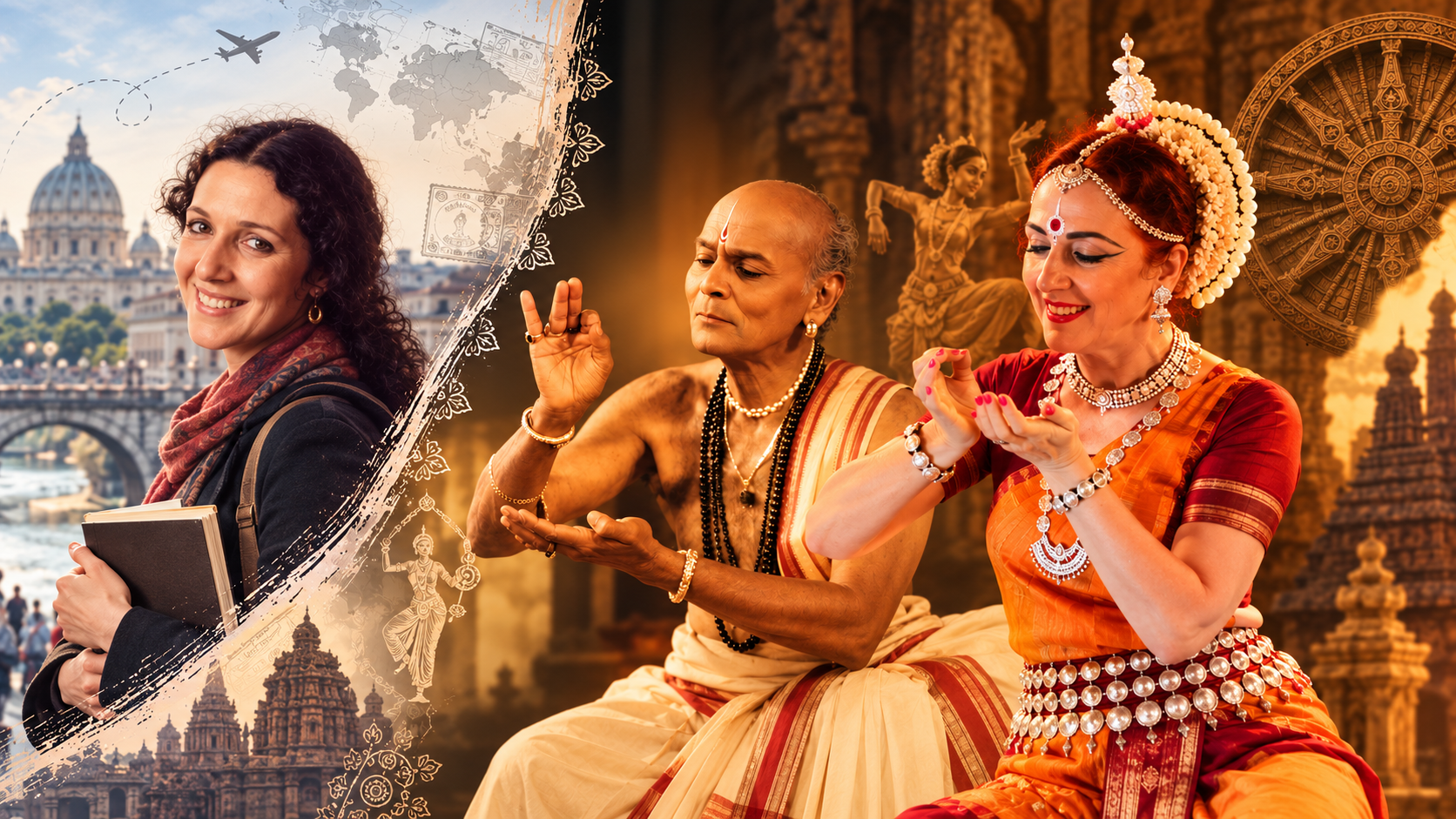
Leaving behind a background in Western philosophy and experimental theatre in Italy, she moved into the traditional gurukul system. She became a disciple of Guru Kelucharan Mohapatra for Odissi and Guru Hari Nayak for Mayurbhanj Chhau. She did not live as a visiting tourist. She adopted the language, the lifestyle, and the relentless, bruising discipline of Cuttack and Bhubaneswar's rehearsal halls.
She knew that to silence the skeptics, she couldn't just be technically flawless. She had to master bhava—the deep, internal emotional landscape of the dance. She had to prove that the soul’s yearning for the divine is a universal human condition, not a regional monopoly.
The Anatomy of Assimilation: Ileana Citaristi's Journey
- 1979–1980s (The Surrender)
- The Artistic Barrier: The Skepticism of the Insider; the barrier of foreign origin.
- The Artistic Resolution: Total immersion into Kelubabu's gurukul and Odia cultural life.
- 1990s (The Dual Master)
- The Artistic Barrier: Proving depth beyond physical imitation and exoticism.
- The Artistic Resolution: Mastered Chhau and Odissi; won National Film Award (Yugant).
- 2001 (The Archivist)
- The Artistic Barrier: Preserving the oral legacy of a deeply traditional maestro.
- The Artistic Resolution: Authored 'The Making of a Guru', the definitive Kelubabu bio.
- 2006 (The Padma Shri)
- The Artistic Barrier: Earning absolute acceptance from the Indian establishment.
- The Artistic Resolution: Conferred the Padma Shri, a first for a foreign-born dancer.
The Biographer and the Architect
As the years bled into decades, Citaristi became more than just a performer; she became one of the tradition's most vital guardians.
She realized that the genius of her master, Guru Kelucharan Mohapatra, existed largely in ephemeral memory. Turning her scholarly lens onto her own lineage, she authored The Making of a Guru, capturing the definitive biography of the maestro and preserving his pedagogical secrets for global posterity.
Simultaneously, she established Art Vision in Bhubaneswar in 1995. Her academy became a unique laboratory where the fluid lyricism of Odissi and the martial, grounded power of Mayurbhanj Chhau were taught side by side. She began choreographing original works, drawing from both Eastern texts and Western mythology (such as the Greek myth of Echo and Narcissus), proving that Odissi's vocabulary was robust enough to tell any story in the world.
The Ultimate Vindication
The ultimate answer to the doubt that shadowed her early years arrived in 2006.
Ileana Citaristi was conferred the Padma Shri by the Government of India. It was a historic milestone—she was the first dancer of foreign origin to receive this honor for contributions to classical Indian dance.
She shattered the myth of the cultural outsider. Through decades of sweat, devotion, and absolute surrender, Citaristi proved that Odissi does not belong exclusively to the geography of its birth. It belongs to anyone willing to bleed for its grace.