Legacy · Odissi
The Mahari’s Heir
How Guru Pankaj Charan Das Rescued Odissi from the Shadows
When the sacred temple traditions faced total social erasure, Odissi’s "Adi Guru" defied the stigma of his lineage to transform the secret grace of the Maharis into proscenium epics.
Taalika Editorial · Tuesday, 27 October · 3 min read
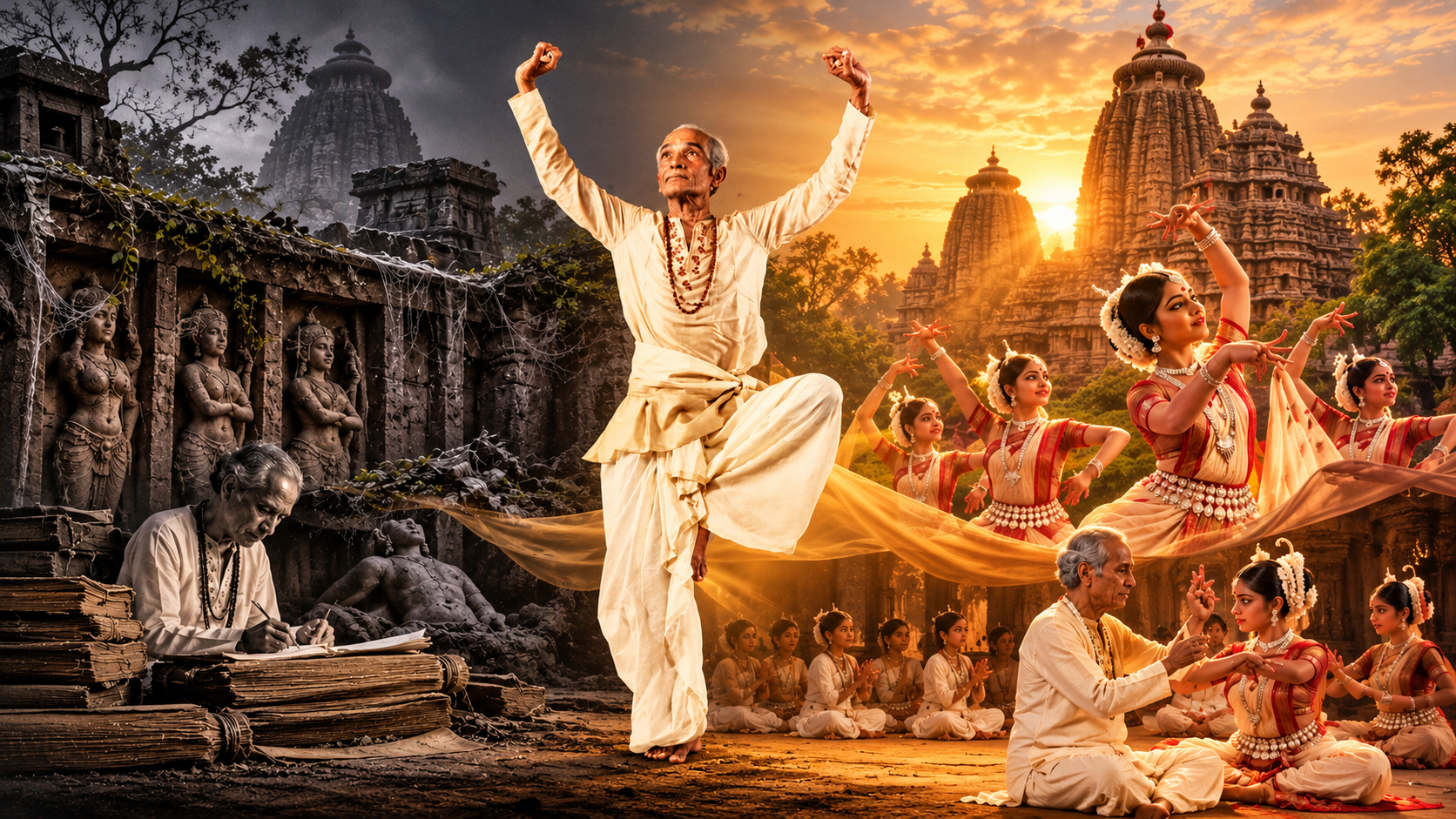
Every classical art form survives because someone refused to let it die in the dark.
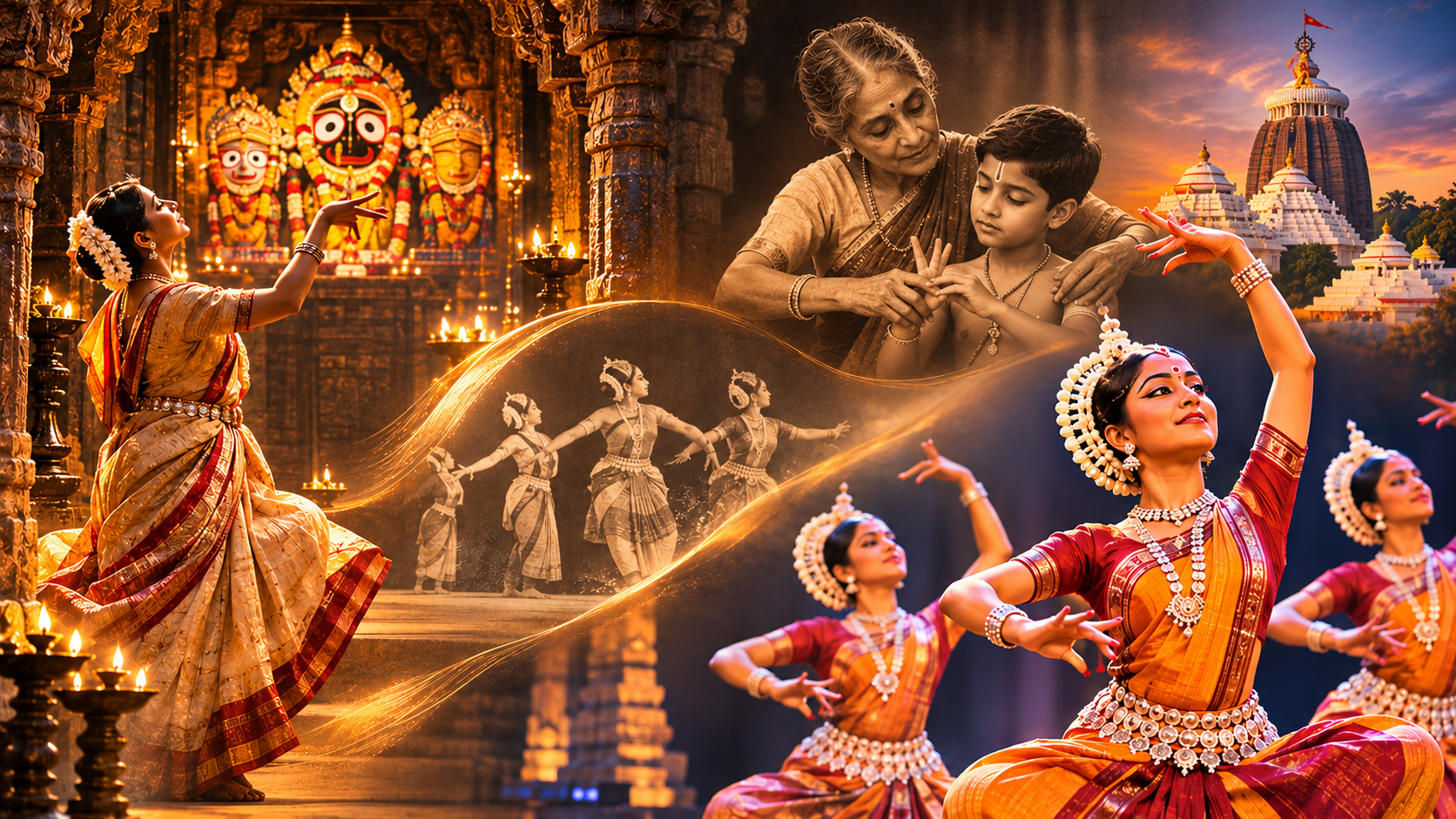
In the early 20th century, the Maharis—the original female ritual dancers of the Jagannath Temple—faced an existential crisis. Stripped of royal patronage and crushed by colonial-era anti-nautch laws, their sacred devotion was violently recast by society as a social stigma. The temple doors were closing on them. The ancient, lyrical grace of Odissi was on the verge of vanishing into complete historical erasure.
Into this suffocating atmosphere stepped Pankaj Charan Das. Adopted by a Mahari, Ratnaprabha Devi, he inherited a profound, intuitive understanding of the dance that outsiders could never access. Yet, he was a male heir in a female-dominated, socially ostracized world.
He faced a brutal, paralyzing doubt: How does a marginalized son of a stigmatized tradition drag a dying, secretive temple ritual onto the modern, respectable stage without destroying its sacred soul?
The Alchemist of the Proscenium
Pankaj Charan Das could not simply mimic the Maharis. He had to translate them.
While others looked to acrobatic Gotipua village troupes or dry textual treatises to reconstruct Odissi, Das relied on the living bloodline of his upbringing. He understood the bhava—the deep, internal devotional surrender—that the Maharis possessed. But to survive the modern era, the dance needed narrative scale. It needed to command the proscenium stage.
He began to choreograph. He merged the lyrical, unhurried grace of temple rituals with the dramatic flair of traditional Rasa Leela and Odia theatre.
The Theatrical Evolution of Guru Pankaj Charan Das
- 1930s–1940s (The Sanctuary)
- The Survival Crisis: Mahari tradition stigmatized; temple rituals fading fast.
- The Adi Guru's Resolution: Preserved the secret, lyrical grace of his adopted lineage.
- 1950s (The Translation)
- The Survival Crisis: Odissi lacked grand theatrical narratives for modern stages.
- The Adi Guru's Resolution: Fused Mahari bhava with the dramatic scale of Odia theatre.
- 1960s (The Masterpiece)
- The Survival Crisis: Female dancers lacked complex, independent character arcs.
- The Adi Guru's Resolution: Choreographed 'Panchakanya', centering epic female agency.
- Legacy (Adi Guru)
- The Survival Crisis: The form needed a foundational architect to guide the revival.
- The Adi Guru's Resolution: Taught the founding triad: Kelucharan, Deba Prasad, Raut.
The Awakening of the Panchakanya
His definitive answer to the skeptics came through his monumental choreographic masterwork: the Panchakanya.
Das turned to the five iconic women of Indian epics—Ahalya, Draupadi, Kunti, Tara, and Mandodari. Before him, female characters in regional dance dramas were often relegated to one-dimensional roles of weeping lovers or submissive wives. Das blew the doors off those limitations. He choreographed complex, psychologically intense arcs that gave female dancers unprecedented agency, ferocity, and tragic depth.
When a dancer performed his Gita Govinda or Panchakanya, they weren't just executing geometry. They were channeling the suppressed, silent power of the Maharis through a distinctly modern, feminist lens. He proved that the temple's grace did not need to be sanitized for the modern world; it only needed to be unleashed.
The Guru of Gurus
To understand the magnitude of Pankaj Charan Das's contribution, one only needs to look at his classroom.
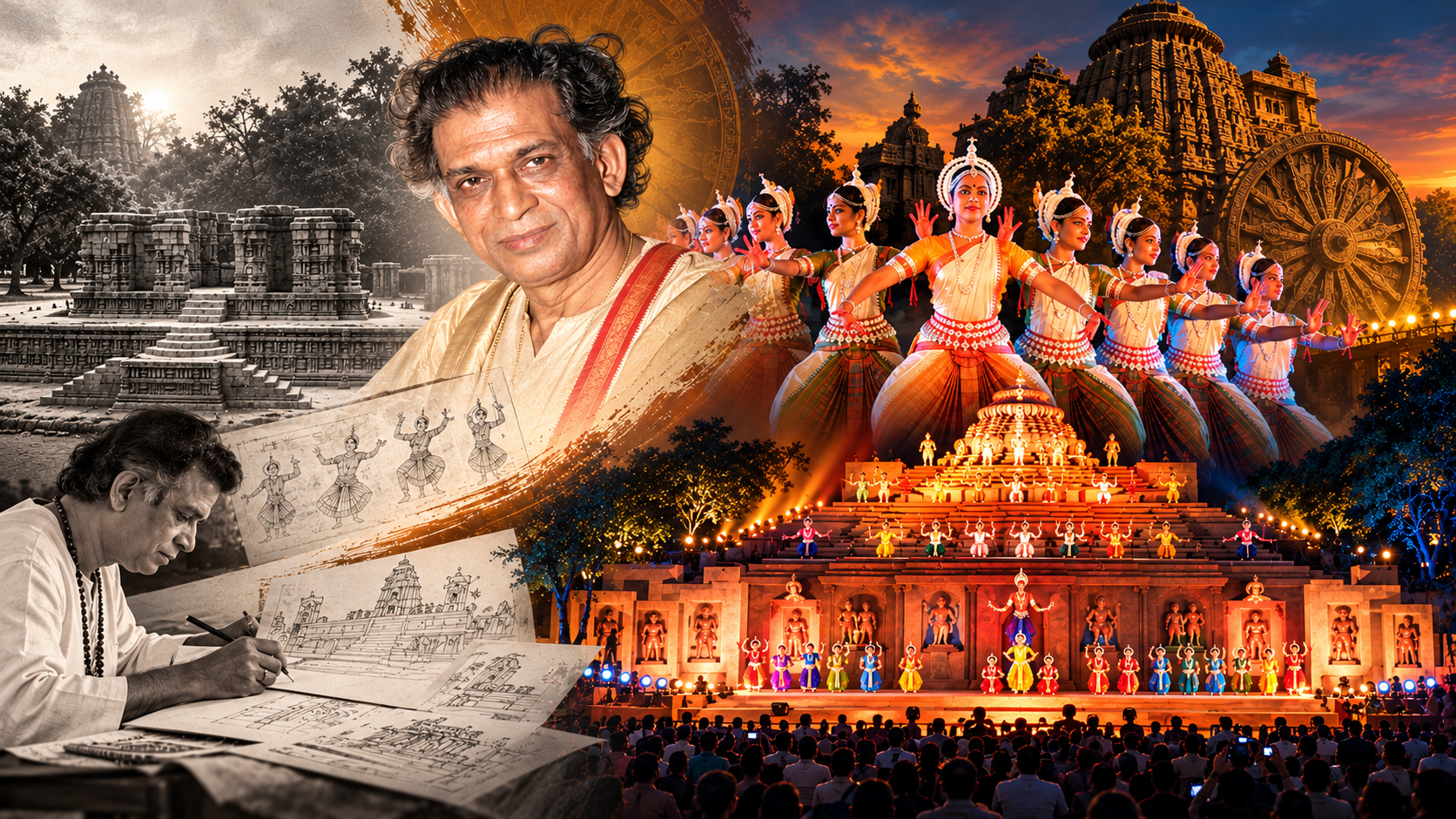
He didn't just save the dance; he forged its architects. He became the "Adi Guru"—the original master who taught the holy trinity of the Odissi revival: Guru Kelucharan Mohapatra, Guru Deba Prasad Das, and Guru Mayadhar Raut. They took his rhythmic blueprints, his deep understanding of Chauka, and his Mahari lyricism, and codified it for the globe.
The doubt that haunted his youth was definitively shattered. Guru Pankaj Charan Das did not let the stigma of his lineage defeat him. By elevating the Mahari’s secret devotion into a universal theatrical triumph, he ensured that whenever Odissi is danced today, the resilient soul of the temple women still commands the light.